
Skip to content
mannafest.faith
Gustave Doré (1866)

New Testament · Book 60 of 66

1 Peter

Peter to scattered exiles across Asia Minor: five chapters on suffering and a living hope. A royal priesthood, a holy nation, a peculiar people.

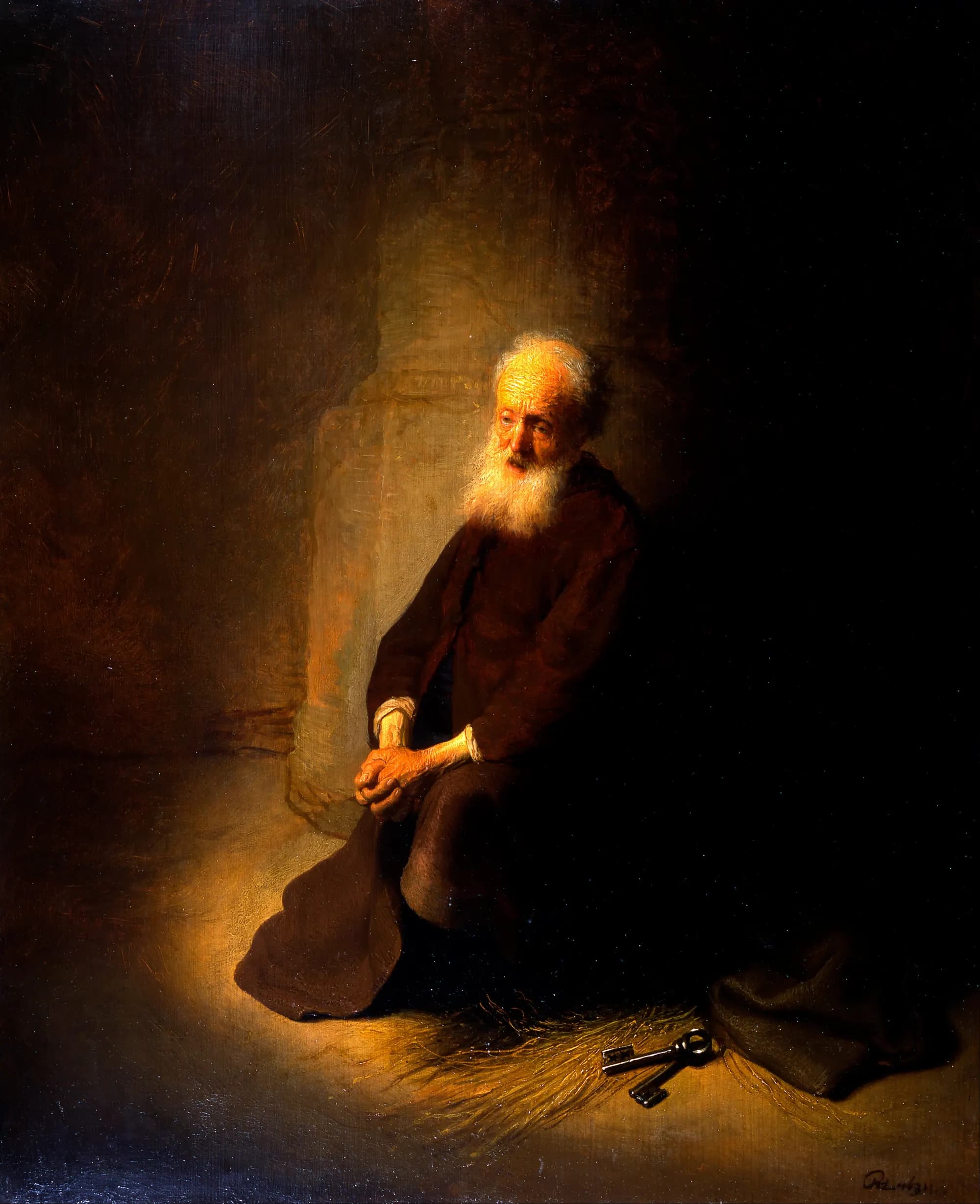
Gustave Doré (1866) — public domain — "Peter Denying Christ" (the letter's own author had already lived the arc he writes of — his own worst failure, restored — before he called others to the same suffering-to-glory hope)

Gustave Doré (1866)

Gustave Doré (1866) — public domain — "Peter Denying Christ" (the letter's own author had already lived the arc he writes of — his own worst failure, restored — before he called others to the same suffering-to-glory hope)

  • 5
    Chapters
  • Living hope
    Keynote
  • Peter
    Apostle-author

But ye are a chosen generation, a royal priesthood, an holy nation, a peculiar people; that ye should shew forth the praises of him who hath called you out of darkness into his marvellous light:

1 Peter 2:9

If you only read a few chapters

Exiles of the Dispersion · 1 Peter · The Study Guide

A Living Hope for the Scattered

Written to churches slandered and marginalized across five Roman provinces, 1 Peter is the pastoral letter for the church under pressure: a call to be ye holy and hold a living hope through undeserved suffering, because the suffering Shepherd who bore our sins in His body on the tree has gone ahead of every sojourner into glory. Every movement of the letter returns to the same axis: suffering, then glory.

Summary

1 Peter is the pastoral letter for a church under social pressure across five Roman provinces, written by the apostle who had already lived his own suffering-to-glory arc. Every movement of the letter returns to the same pairing: trial now, glory revealed later.

  • The chart traces the suffering-to-glory axis verse by verse across all five chapters, from the trial of faith in chapter 1 to the God of all grace in chapter 5.
  • Four Christ pictures anchor the letter: the Passover Lamb, the Living Stone, the Suffering Servant of Isaiah 53, and the Chief Shepherd who charges the elders.
  • Contested points include who wrote the letter, the four readings of the spirits in prison in 3:19, whether 2:24's healing is spiritual or physical or both, and what Babylon means in 5:13.
  • The addressees are not one church but a circuit across five provinces of Asia Minor, a letter carried region to region rather than posted to one city.

The Suffering-to-Glory Arc

the letter's own recurring movement: dip at every trial, rise at every mention of the glory to come

1 Peter does not argue in a straight line. It spirals: identity, then conduct, then endurance, circling back to the same pairing three times: trial now, glory revealed later (1:6–7; 4:12–19; 5:10). The line below traces that pairing verse by verse across all five chapters, low where the letter names the suffering, high where it names the glory that follows it.

glorysuffering12345
  1. 1Salutation and the living hope1 Peter 1:1–12

    Election, the new birth, the inheritance reserved in heaven, and the trial of faith more precious than gold.

  2. 2Called to holiness1 Peter 1:13–2:10

    “Ye shall be holy; for I am holy”: redeemed with precious blood, the living Stone, the royal priesthood.

  3. 3Sojourners in a hostile world1 Peter 2:11–3:12

    The household codes reframed around Christ's own suffering pattern; unity and blessing instead of railing.

  4. 4Suffering for righteousness' sake1 Peter 3:13–4:19

    The readiness to give an apologia; the proclamation to the spirits in prison; the fiery trial as normal, not strange.

  5. 5Shepherding the flock1 Peter 5:1–14

    Elders as under-shepherds of the Chief Shepherd; the God of all grace who will himself perfect, establish, and strengthen them.

What 1 Peter Alone Teaches

Born again to a living hope

The letter opens with a blessing rather than a thanksgiving, and everything in it hangs on one past event. God 'begat us again unto a living hope by the resurrection of Jesus Christ from the dead' (1:3). The hope is called living because it rests on a man who is alive. What it looks forward to is described in four negatives that all say the same positive thing, an inheritance that cannot rot, stain or fade, 'reserved in heaven for you' (1:4), with the heirs kept as carefully as the inheritance, 'who by the power of God are guarded through faith unto a salvation ready to be revealed in the last time' (1:5). The verb for guarded is a garrison word. Then Peter turns to the readers' present grief and gives it a purpose: 'the proof of your faith, being more precious than gold that perisheth though it is proved by fire' (1:7). Gold goes into the fire to come out pure and it still perishes in the end. Faith goes into the fire and comes out at the revelation of Jesus Christ. He adds a line about the readers that has been quoted ever since, since none of them had seen what he saw: 'whom not having seen ye love' (1:8), and yet 'ye rejoice greatly with joy unspeakable and full of glory' (1:8).

1 Peter 1:3 · 1 Peter 1:5 · 1 Peter 1:7 · 1 Peter 1:8

What the prophets searched for, and what angels want to see

One short paragraph places the readers at the centre of a long search. The prophets wrote about a grace that was coming to somebody else, and they worked at their own texts trying to see when and how, since 'the prophets sought and searched diligently, who prophesied of the grace that should come unto you' (1:10). What was in them as they wrote is named: 'the Spirit of Christ which was in them did point unto, when it testified beforehand the sufferings of Christ, and the glories that should follow them' (1:11). That single clause says the Spirit of Christ was active in Israel's prophets centuries before Bethlehem, and it gives the shape of all prophecy in four words, suffering first and glory after. They were told the answer was for a later generation, 'that not unto themselves, but unto you, did they minister these things' (1:12). The paragraph ends with a line that opens a window: 'which things angels desire to look into' (1:12). The verb pictures someone stooping to peer in, the same posture as at the empty tomb. Beings who have stood before God from the beginning lean in to watch the gospel preached to provincial households in Cappadocia.

1 Peter 1:10 · 1 Peter 1:11 · 1 Peter 1:12

Redeemed with precious blood, and called to be holy

Peter grounds Christian behaviour in the price paid for it. 'ye were redeemed, not with corruptible things, with silver or gold, from your vain manner of life handed down from your fathers' (1:18), and instead 'with precious blood, as of a lamb without blemish and without spot, even the blood of Christ' (1:19). The words for blemish and spot are the language of the sacrificial inspection, where an animal was examined before it could be brought. The lamb was chosen long before it was inspected: 'who was foreknown indeed before the foundation of the world, but was manifested at the end of the times for your sake' (1:20). Out of that comes the call: 'like as he who called you is holy, be ye yourselves also holy in all manner of living' (1:15), quoting Leviticus, 'Ye shall be holy; for I am holy' (1:16), which stands in the law as 'be ye holy; for I am holy' (Leviticus 11:44). Holiness in Leviticus meant being set apart for God's use, and Peter applies that priestly vocabulary to householders and slaves in Roman provinces. The word he uses for their situation is sojourning (1:17), which keeps the whole ethic in the key the letter began in.

1 Peter 1:15 · 1 Peter 1:18 · 1 Peter 1:19 · 1 Peter 1:20

Living stones, and Israel's titles given to the church

Peter builds a temple out of people. Christ is 'a living stone, rejected indeed of men, but with God elect, precious' (2:4), and then, in the letter's boldest sentence, 'ye also, as living stones, are built up a spiritual house, to be a holy priesthood, to offer up spiritual sacrifices, acceptable to God through Jesus Christ.' (2:5). Three Old Testament stone texts follow, the foundation stone of 'Behold, I lay in Zion for a foundation a stone, a tried stone, a precious corner-stone of sure foundation' (Isaiah 28:16), the rejected stone of 'The stone which the builders rejected' (Psalms 118:22), and the stumbling stone of 'for a stone of stumbling and for a rock of offence to both the houses of Israel' (Isaiah 8:14). Then the titles: 'But ye are an elect race, a royal priesthood, a holy nation, a people for God’s own possession' (2:9), taken from what God said at Sinai, 'ye shall be unto me a kingdom of priests, and a holy nation' (Exodus 19:6). Say plainly what is happening here, because a great deal has been built on this verse that Peter never wrote. He is giving Gentile believers a share in Israel's standing, and the proof text he reaches for at 2:10 is Hosea, where God promises to restore the very people he had called Lo-ammi: 'who in time past were no people, but now are the people of God: who had not obtained mercy, but now have obtained mercy.' (2:10) answers 'I will have mercy upon her that had not obtained mercy; and I will say to them that were not my people, Thou art my people' (Hosea 2:23). A passage about God keeping his word to Israel is the last place to find an argument that he has cancelled it. God has a plan for Israel, and the church is brought in alongside.

1 Peter 2:4 · 1 Peter 2:5 · 1 Peter 2:9 · 1 Peter 2:10

The example of Christ, and Isaiah 53 in the middle of it

The instruction to household servants turns, without warning, into the longest description of the cross in the letter, and it is stitched together out of Isaiah's fourth servant song. 'Christ also suffered for you, leaving you an example, that ye should follow his steps' (2:21). The word for example is the copy line a schoolmaster wrote for a child to trace. Then Isaiah, phrase by phrase. 'who did no sin, neither was guile found in his mouth' (2:22) comes from 'although he had done no violence, neither was any deceit in his mouth' (Isaiah 53:9). The endurance of 2:23 answers the servant who opened not his mouth. 'who his own self bare our sins in his body upon the tree' (2:24) carries Isaiah's substitution, 'he was wounded for our transgressions, he was bruised for our iniquities' (Isaiah 53:5). The healing clause is quoted directly, 'by whose stripes ye were healed' (2:24) from 'with his stripes we are healed' (Isaiah 53:5). And the sheep come home: 'ye were going astray like sheep; but are now returned unto the Shepherd and Bishop of your souls' (2:25) answers 'All we like sheep have gone astray; we have turned every one to his own way' (Isaiah 53:6). Peter had denied him in a courtyard and had watched him keep silent before Caiaphas. When he wants to teach suffering people how to behave, he describes what he saw.

1 Peter 2:21 · 1 Peter 2:22 · 1 Peter 2:24 · 1 Peter 2:25

The fiery trial, and how to answer the people who ask

Peter tells these congregations to expect the pressure and to read it correctly. 'think it not strange concerning the fiery trial among you, which cometh upon you to prove you' (4:12), because 'insomuch as ye are partakers of Christ’s sufferings, rejoice' (4:13). Suffering for wrongdoing is ruled out of the count (4:15), and suffering under the name is given a title: 'if a man suffer as a Christian, let him not be ashamed; but let him glorify God in this name' (4:16). This is one of only three places the word Christian appears in the New Testament, and here it is a label somebody else has pinned on them. The instruction for daily life under that pressure is famous for good reason: 'sanctify in your hearts Christ as Lord: being ready always to give answer to every man that asketh you a reason concerning the hope that is in you, yet with meekness and fear' (3:15). Every part of that sentence carries weight. The answer is expected of every believer, it is owed to whoever asks, it concerns a hope rather than a system, and the manner is set as firmly as the content. Peter adds the reason in the next verse, that a clean life takes the force out of the slander (3:16).

1 Peter 3:15 · 1 Peter 4:12 · 1 Peter 4:14 · 1 Peter 4:16

Gifts, elders, and a lion on the prowl

The last section turns to how the congregations run themselves. Every member has been handed something to use: 'according as each hath received a gift, ministering it among yourselves, as good stewards of the manifold grace of God' (4:10). Peter sorts them into speaking and serving, and sets the standard for the first at the highest point available, 'if any man speaketh, speaking as it were oracles of God' (4:11). The gifts are the church's ordinary equipment and they are still handed out on the same terms. Then the elders, addressed by a man who declines to pull rank: 'The elders therefore among you I exhort, who am a fellow-elder, and a witness of the sufferings of Christ' (5:1). The charge is 'Tend the flock of God which is among you, exercising the oversight, not of constraint, but willingly, according to the will of God; nor yet for filthy lucre, but of a ready mind' (5:2), and the manner is fixed at 5:3, 'making yourselves ensamples to the flock' (5:3). The pay is named too, 'when the chief Shepherd shall be manifested, ye shall receive the crown of glory that fadeth not away' (5:4). Under all of it runs one plain warning about who is actually behind the pressure: 'Be sober, be watchful: your adversary the devil, as a roaring lion, walketh about, seeking whom he may devour' (5:8), answered by 'whom withstand stedfast in your faith' (5:9) and by the promise that the God of all grace 'shall himself perfect, establish, strengthen you' (5:10).

1 Peter 4:10 · 1 Peter 5:2 · 1 Peter 5:8 · 1 Peter 5:10

Christ in 1 Peter

  • ProphecyThe Spirit of Christ in the prophets. Peter says who was speaking through Israel's prophets: 'the Spirit of Christ which was in them did point unto, when it testified beforehand the sufferings of Christ, and the glories that should follow them' (1:11). Three claims sit in one clause. The Spirit at work in the prophets is the Spirit of Christ, which places him in Israel's history long before the incarnation. The content of prophecy is his suffering and his glory in that order. And the prophets themselves were searching their own writings for the timing, which is a rare glimpse of how inspiration felt from the inside. The paragraph closes with angels stooping to look in (1:12), so both ends of creation are watching the same story. 1 Peter 1:11
  • TypologyA lamb without blemish and without spot. 'but with precious blood, as of a lamb without blemish and without spot, even the blood of Christ' (1:19). The two words are the technical vocabulary of the sacrificial system, where an animal was examined for defects before it could be offered. Behind the phrase stand the Passover lamb of Exodus 12, chosen on the tenth day and kept until the fourteenth, and Isaiah's servant led to the slaughter. Peter puts the choosing before the world existed, 'who was foreknown indeed before the foundation of the world' (1:20), so the lamb was appointed before there was a flock to redeem. John the Baptist had used the same title of him at the Jordan, and Peter had been standing nearby. 1 Peter 1:19
  • QuotationThe stone the builders rejected. Three stone texts are set side by side at 2:6-8. The foundation stone comes from Isaiah, 'Behold, I lay in Zion for a foundation a stone, a tried stone, a precious corner-stone of sure foundation' (Isaiah 28:16). The rejected stone comes from the psalm sung at the festivals, 'The stone which the builders rejected' (Psalms 118:22), the same verse Jesus quoted against the chief priests. The stumbling stone comes from Isaiah again, 'for a stone of stumbling and for a rock of offence to both the houses of Israel' (Isaiah 8:14). Peter had heard the second of the three from the Lord's own mouth in the temple, and in Acts 4:11 he had already thrown it at the council that arrested him. What he adds here is that the builders' verdict and God's verdict are opposite: 'rejected indeed of men, but with God elect, precious' (2:4). 1 Peter 2:7
  • QuotationBy whose stripes ye were healed. The clearest use of Isaiah 53 anywhere in the New Testament runs through 2:22-25. 'who his own self bare our sins in his body upon the tree, that we, having died unto sins, might live unto righteousness; by whose stripes ye were healed' (2:24). Isaiah's line is 'with his stripes we are healed' (Isaiah 53:5), and Peter changes the pronoun to address the people in front of him. The word for tree is the word the Old Testament uses of a body hung on wood, which carries the curse of Deuteronomy 21:23 into the sentence. Then the shepherd, 'ye were going astray like sheep; but are now returned unto the Shepherd and Bishop of your souls' (2:25). The man who wrote it had been told to feed the sheep by the shore of Galilee. 1 Peter 2:24
  • TypologyEight souls saved through water. The flood becomes a picture of salvation. 'when the longsuffering of God waited in the days of Noah, while the ark was a preparing, wherein few, that is, eight souls, were saved through water' (3:20), and then 'which also after a true likeness doth now save you, even baptism' (3:21). The correspondence is careful. The water that judged the world carried the ark, so the eight were brought through the judgment rather than around it. Peter defines the water in the same breath, 'not the putting away of the filth of the flesh, but the interrogation of a good conscience toward God' (3:21), and locates the saving power, 'through the resurrection of Jesus Christ' (3:21). The paragraph ends at the ascension, 'who is on the right hand of God, having gone into heaven; angels and authorities and powers being made subject unto him.' (3:22). 1 Peter 3:21

The Argument

the whole letter in three sentences

Author
Peter the apostle (1:1), by Silvanus (5:12)
Date
Traditional c. AD 62–64, shortly before Peter's martyrdom
Audience
Sojourners of the Dispersion in Pontus, Galatia, Cappadocia, Asia, and Bithynia (1:1)
Genre
General/circular epistle: real letter carrying exhortation
  1. 1

    You are God's elect people, begotten again to a living hope by Christ's resurrection, called to holiness because your redemption cost the precious blood of a spotless Lamb (1:1–2:10).

  2. 2

    Live that identity out in a hostile society (submissive, honorable, ready to give an answer for your hope) because Christ Himself suffered unjustly and left you His example (2:11–3:22).

  3. 3

    When the fiery trial comes, do not be surprised; rejoice as partakers of Christ's sufferings, cast your care on Him, resist the devil, and stand fast in the true grace of God (4:1–5:14).

Where 1 Peter Points to Christ

Lamb, Stone, Suffering Servant, Proclaimer, Chief Shepherd

The Passover Lamb1:19 → Exod 12:5

Redeemed not with corruptible things, “but with precious blood, as of a lamb without blemish and without spot, even the blood of Christ,” directly echoing the unblemished lamb of the Exodus: redemption priced not in silver or gold but in a life.

The Living Stone2:4–8 → Isa 28:16; Ps 118:22; Isa 8:14

A deliberate three-text catena: elect and precious cornerstone, the stone the builders rejected made head of the corner, a stone of stumbling. Israel's rejection becomes the very mechanism by which He founds the church: the same Psalm 118:22 Jesus applies to Himself and Peter reuses in Acts 4:11.

The Suffering Servant2:21–25 → Isaiah 53

The letter's most sustained Old Testament engagement: five verses threaded through Isaiah 53: no sin, no guile, bore our sins in His body upon the tree, by whose stripes ye were healed, sheep gone astray now returned to the Shepherd. No New Testament passage leans more explicitly on the Fourth Servant Song.

The four Servant Songs →
The Proclaimer to the Spirits3:18–22

Put to death in the flesh, quickened in the Spirit, Christ “went and preached” (kēryssō, a herald's proclamation) to “the spirits in prison” disobedient in the days of Noah. The letter's single most contested verse (see Contested Points).

See Contested Points ↓
The Chief Shepherd2:25; 5:4

“The Shepherd and Bishop of your souls” (2:25) and “the chief Shepherd” (5:4) who will appear and reward the under-shepherds: Peter charging elders with the very commission he received from the risen Christ in John 21.

Themes

six load-bearing lines through the letter

01

Living hope

1 Peter 1:3–5

Not wishful sentiment but a begotten reality, grounded in the historical resurrection: the letter's controlling theme; holiness and endurance are its fruit, not its precondition.

02

Redemption by precious blood

1 Peter 1:18–19

Not silver or gold (the coin of the pagan cults around them) but the blood of a spotless Lamb: Passover typology fused with sacrificial-lamb language.

03

Holiness as the shape of election

1 Peter 1:14–16

“Like as he who called you is holy, be ye yourselves also holy,” quoting Leviticus directly. Not legalism but conformity to the character of the One who called them.

04

The church as temple and priesthood

1 Peter 2:4–10

Living stones built into a spiritual house, a holy priesthood, culminating in a fourfold title lifted from Exodus 19:6 and Isaiah: the fullest New Testament articulation of this thread outside Ephesians.

05

Apologia: reasoned hope under pressure

1 Peter 3:15

“Being ready always to give answer to every man that asketh you a reason concerning the hope that is in you”: the NT's charter verse for apologetics, paired deliberately with meekness and fear.

06

The eschatological reversal

1 Peter 1:6–7; 4:13, 17–19; 5:10

Present suffering is for a season, a refining trial more precious than gold, and it precedes the glory that shall be revealed.

Author
The apostle Peter (1:1); Silvanus assisted (5:12)
Date
Early 60s AD, likely from ‘Babylon’ (Rome, 5:13)
Audience
Christians in Pontus, Galatia, Cappadocia, Asia, and Bithynia: mostly Gentile, facing persecution

As the earliest witnesses report them; positions and holders under Who Wrote It.

The world behind this book

The book of 1 Peter
Where
Written from Rome, with Silvanus as secretary, to be carried on a long circuit through five Roman provinces in what is now Turkey.

The history, and what it meant to them

The history

The suffering in this letter is not yet the sword; it is the cold shoulder. Peter's readers were mocked, gossiped about, cut out of trade and social life because they had stopped joining "the same excess of riot." In a world where business, politics, and religion all ran through the same feasts and temples, dropping out cost money and standing.

Peter calls them "sojourners" and "strangers." Those were real legal words. A resident alien in a Greek city had limited rights, paid different taxes, and could not fully take part in civic life. Some of Peter's readers were literally in that position — which makes his announcement that they are "a chosen generation, a royal priesthood, a holy nation" a stunning reversal of their social status.

Fifty years later the Roman governor Pliny the Younger wrote to the emperor Trajan from Bithynia — one of the very provinces on Peter's list — describing trials of Christians who "sang a hymn to Christ as to a god" and refused to curse him or burn incense to the emperor's image. The pressure Peter describes was already heading that direction.

Peter also gives household instructions — to citizens, servants, wives, husbands. The form was a familiar Greco-Roman genre. What is not familiar is the reason he gives: Christ suffered unjustly and left you a pattern.

What it meant to them

To people being told they were nobody, Peter said: you are God's own possession, born again to a living hope, with an inheritance "reserved in heaven" that no one in your town can touch.

And when the "fiery trial" came, they were not to be shocked by it, as if something strange had happened. Suffering for the Name was not proof that God had lost control; it was fellowship with Christ's own sufferings, and it had an end already fixed.

Sources cited

Every work MannaFest builds on →

Who Wrote It, and When

Author
The letter names its writer in the first three words and gives his office: 'Peter, an apostle of Jesus Christ, to the elect who are sojourners of the Dispersion in Pontus, Galatia, Cappadocia, Asia, and Bithynia,' (1:1). It names the man who carried the pen at the close, 'By Silvanus, our faithful brother, as I account him, I have written unto you briefly' (5:12), and sends greetings from Mark (5:13). The writer says he watched the passion, 'who am a fellow-elder, and a witness of the sufferings of Christ' (5:1), and the letter is full of the fisherman's later life: the flock he was told three times to feed, the shepherd language of 2:25 and 5:2-4, the reminder that the Lord committed himself to a righteous judge (2:23), and the humility that girds itself for service (5:5). The main objection has always been the Greek, which is polished, well ordered, and full of Old Testament quotation in the Septuagint form. The letter answers that objection itself by naming Silvanus, the Silas of Acts, a Roman citizen and a leading man of the Jerusalem church who had carried Paul's letters.
  • Peter the apostle, writing through Silvanus from Rome in the early 60s

    held by the letter's own claim at 1:1 and 5:1; the earliest external use of any New Testament letter, since Polycarp quotes it repeatedly around AD 110 and Papias knew it, as Eusebius reports in Ecclesiastical History 3.39; and the sustained modern case of Edward Gordon Selwyn (The First Epistle of St. Peter, 1946) and Karen H. Jobes (1 Peter, Baker Exegetical Commentary, 2005)

    Eusebius classes 1 Peter among the books that were never disputed, which sets it apart from 2 Peter. No ancient writer questioned it.

  • A Petrine circle in Rome writing after his death in his name and with his teaching

    held by John H. Elliott (1 Peter, Anchor Bible, 2000) and a substantial body of critical scholarship, resting on the Greek, on the echoes of Pauline language, and on a reading of the persecution as later and official

    The argument from Pauline echoes cuts both ways. Silvanus worked with Paul for years and would carry his vocabulary, and Peter and Paul were preaching the same gospel, which is what makes shared language expected rather than surprising.

Date
The suffering the letter addresses is local hostility rather than an empire-wide legal campaign. Believers are slandered and shamed, 'they think it strange that ye run not with them into the same excess of riot, speaking evil of you' (4:4), and they are told to be ready to explain themselves under questioning (3:15). At the same time the state is still described as an ordinary and useful thing, with governors 'sent by him for vengeance on evil-doers and for praise to them that do well' (2:14). That combination fits the early 60s, before Nero turned on the church in Rome in AD 64, and it fits a first wave of that trouble spreading outward. It does not fit the organized prosecutions of the second century, when a governor could execute for the name alone.
  • AD 62 to 64, from Rome, shortly before the Neronian persecution

    held by the traditional dating, held with Petrine authorship by Selwyn (1946) and Jobes (2005); it accounts for Mark and Silvanus both being with the writer and for the settled view of civil authority at 2:13-17

  • AD 65 to 68, during the Neronian trouble

    held by commentators who read 'the fiery trial among you' (4:12) and the shame attached to the name at 4:16 as reflecting a persecution already underway

  • AD 80 to 95, in the reign of Domitian or later

    held by John H. Elliott (2000) and others who date the letter after Peter's death and read the suffering as more formal

    The strongest counter is the letter's own picture of the state. A writer after the persecutions would have found it hard to write 'Honor all men. Love the brotherhood. Fear God. Honor the king.' (2:17) without qualification.

Audience
Five Roman provinces are named in 1:1, and together they cover most of what is now Turkey north and west of the Taurus range. The order of the list follows a plausible route for a courier landing on the Black Sea coast and travelling clockwise. The readers are largely Gentile, since their old life is described as 'your vain manner of life handed down from your fathers' (1:18) and as the time when they 'walked in lasciviousness, lusts, winebibbings, revellings, carousings, and abominable idolatries' (4:3), which is a description no Jewish congregation would recognize. They are also addressed with Israel's own titles and with Israel's own Scriptures, which is the letter's characteristic move. They include household servants (2:18) and wives married to unbelieving husbands (3:1), so a real cross-section of provincial society.
  • Mainly Gentile believers, addressed in the language of Israel

    held by the reading of 1:14, 1:18 and 4:3 taken plainly, and the position of most commentary in every tradition

  • Mixed congregations with a Jewish core, addressed as the Dispersion in the literal sense

    held by commentators who take 'sojourners of the Dispersion' (1:1) as an ethnic description and point to the density of Old Testament quotation

    The two readings meet in the middle, since the letter's argument works by giving Gentile believers the standing and the vocabulary of Israel without taking anything from Israel.

  • Literal resident aliens and displaced people in the provinces, whose legal status the letter addresses directly

    held by John H. Elliott (A Home for the Homeless, 1981), who argued that the words at 1:1 and 2:11 name a real social class rather than a figure of speech

    Most commentators accept the social colour Elliott recovered while reading the terms as describing the church's standing in the world.

Occasion
Congregations scattered across five provinces were being made to feel like outsiders, and some were beginning to wonder whether the shame meant something had gone wrong. Peter writes to tell them the opposite, that suffering for the name is the pattern their Lord set and the proof that the Spirit rests on them: 'If ye are reproached for the name of Christ, blessed are ye; because the Spirit of glory and the Spirit of God resteth upon you.' (4:14). The letter gives them an identity that no neighbour can take away (2:9), a hope fixed on something outside the reach of the empire (1:4), a pattern for behaviour under pressure (2:12, 3:15-16), and a horizon: 'the end of all things is at hand' (4:7). Its purpose is stated in its last lines, 'testifying that this is the true grace of God: stand ye fast therein.' (5:12).

The Years of 1 Peter

1 Peter timeline

  1. c. AD 30

    Peter is restored beside the sea of Galilee and told to feed the flock, the charge he passes on at 5:2.

    1 Peter 5:2

  2. c. AD 49

    Silas, the Silvanus of 5:12, is sent from the Jerusalem council with Paul and Barnabas and later travels as Paul's companion.

    1 Peter 5:12

  3. c. AD 50s

    Congregations form across Pontus, Galatia, Cappadocia, Asia and Bithynia, some of them from Paul's mission and some from work no record names.

    1 Peter 1:1

  4. c. AD 62-64

    On the traditional dating the letter is written from Rome through Silvanus, with Mark present.

    1 Peter 5:13

  5. AD 64

    Fire destroys much of Rome and Nero fastens the blame on the Christians, as Tacitus records in Annals 15.44.

  6. c. AD 65-68

    Peter is put to death at Rome under Nero, according to the early and consistent tradition.

  7. AD 70

    Jerusalem falls, and the churches of Asia Minor become the centre of gravity of the Greek-speaking church.

  8. c. AD 110

    Polycarp of Smyrna quotes 1 Peter repeatedly in his letter to the Philippians, the earliest heavy use of any New Testament letter.

  9. c. AD 112

    Pliny writes to Trajan from Bithynia-Pontus about how to try Christians, describing believers in the regions named at 1:1.

  10. 3rd to 4th century

    Papyrus 72 is copied in Egypt, carrying 1 Peter, 2 Peter and Jude together.

  11. c. AD 325

    Eusebius lists 1 Peter among the books that were never disputed, in contrast with 2 Peter.

  12. 1939-1949

    Excavation of the necropolis under St Peter's uncovers the second-century monument over the grave the Roman church was already honoring.

Further Reading on 1 Peterwith the work named
Chuck Misslerbrief quote

Return of the Nephilim / Genesis & the Nephilim (lecture series, late 1990s)

the founder's formative teacher, and a leading voice for the Watchers reading of 3:19: the same Genesis 6 fallen-angels reading this site's tradition carries through its Genesis catalog.

Timothy Alberinobrief quote

Birthright: The Coming Posthuman Apocalypse (2020)

A corroborating voice alongside Missler on 3:19's angelic-imprisonment reading, with an emphasis on Genesis 6 as a calculated assault on the seed-promise.

Derek Princebrief quote

Blessing or Curse: You Can Choose (1990)

Names 1 Peter 2:24 alongside Isaiah 53:5 as covenantal ground for healing-in-the-atonement, held with strong covenantal framing and without the prosperity excesses of the wider stream.

Kenneth Haginbrief quote

Healing Belongs to Us (1969)

The most explicit statement of the healing-in-atonement case from 2:24 read with Isaiah 53:4–5 and Matthew 8:17: healing as covenant inheritance rather than sovereign exception.

Bill Johnsonbrief quote

When Heaven Invades Earth (2003)

Healing as the believer's normative rather than exceptional ministry: the contemporary popular articulation of the same reading of 2:24.

Smith Wigglesworthbrief quote

Ever Increasing Faith (1924)

The early-Pentecostal faith-and-healing curriculum standing behind the whole stream; his posture of refusing to be governed by sight or feeling is its temperamental root.

Reinhard Bonnkebrief quote

Mighty Manifestations: The Gifts and Power of the Holy Spirit (1994)

Healing as confirmation following the preached gospel: the same conviction worked out in mass-evangelism rather than in personal-appropriation terms.

R. C. Sproulbrief quote

The Holiness of God (1985)

The Reformed-register parallel to 1:15–16's call to be holy as the One who called you is holy, and a strong penal-substitution voice bearing on 2:24, reading its healing as healing from sin.

John Piperbrief quote

Desiring God: Meditations of a Christian Hedonist (1986)

The frame for 1:6–7 and 4:13 in which present grief and future joy are held together rather than traded off.

A. W. Tozerbrief quote

The Knowledge of the Holy (1961)

The divine-attributes register beneath 1:14–16: what a church believes about God's holiness is what it will become under pressure.

Matthew Henry · Jamieson-Fausset-Brown · John Calvinpublic domain

verse-by-verse commentary on the Catholic Epistles (1710 · 1871 · 1551)

The public-domain floor for the letter (election, holiness, the priesthood-of-believers passage, and the spiritual reading of 2:24's healing) beneath the roster's modern voices.

One gap in the sources: 3:15 is the New Testament's charter verse for apologetics, and no voice on this roster has yet been confirmed treating it in a specific work. Spurgeon preached across the letter, but no individual sermon on it is confirmed here either. Both are left uncited rather than approximated. all voices on the roster are treated equally.

Contested Points

the positions, and who holds each

Did Peter write 1 Peter?

The critical case is real, and it is not suppressed here.

The case for Peter

The letter claims him (1:1) and claims eyewitness standing, “a witness of the sufferings of Christ” (5:1). Silvanus is named as the hand it was written by (5:12), which accounts for polished literary Greek from a Galilean fisherman; Acts 4:13's “unlearned and ignorant” is a judgment about formal rabbinic training, not about literacy or intelligence. And the letter keeps touching the Gospel record from the inside: the shepherd-charge Peter received in John 21 reappears as his charge to elders in 5:1–4, and 3:14 echoes the beatitude of Matthew 5:10.

The case for a later hand

Much critical scholarship dates the letter after Peter's traditional death (c. AD 64–68), into the 70s–90s, on four grounds: the sophisticated literary Greek; the letter's apparent dependence on Pauline vocabulary and on the household-code form; the assumption of organized, empire-wide hostility suffered “for the Name” (4:14–16), read as reflecting the later Trajan-era climate that Pliny's correspondence documents in this very region; and the fact that pseudonymous circular letters written in an apostle's name were a known and not-necessarily-deceptive literary device. This is a live majority position in critical scholarship, not a fringe one.

Where the readings meet: Both cases are given at strength, because a reader who first meets the critical argument somewhere else should not meet it as a surprise. Those who hold Petrine authorship, with Silvanus as amanuensis dated c. AD 62–64, read the suffering the letter actually describes (slander, social ostracism, being spoken against as evildoers) as more naturally local hostility than a state persecution apparatus that did not yet exist in that form, and treat the amanuensis explanation for the Greek as standard and adequate.

The spirits in prison (3:18–22)

The letter's single most contested verse: four readings, presented at full strength.

The Augustinian view

Christ, by His preexistent Spirit, preached repentance through Noah to Noah's disobedient contemporaries, who are now imprisoned awaiting judgment because they rejected that preaching in their lifetime. Requires no descent between death and resurrection; coheres with 2 Peter 2:5's “Noah… a preacher of righteousness.”

The descensus view

Between His death and resurrection, Christ descended and proclaimed His triumph to imprisoned spirits, traditionally tied to the Apostles' Creed's descent clause. Takes “made alive in the spirit… he went and preached” at face value as a post-death, pre-resurrection act.

The Watchers view

“The spirits” (pneumasin, not the usual word for human souls) “in prison” are the fallen angelic Watchers of Genesis 6:1–4, imprisoned since Noah's day: the tradition developed in 1 Enoch and echoed at Jude 6 and 2 Peter 2:4's angels “reserved unto judgment.” Christ's proclamation is a declaration of victory over these specific fallen spirits, not an evangelistic offer to the human dead.

The post-mortem-evangelism view

A minority reading takes the passage as evidence of a general post-mortem opportunity to respond to Christ. Presented at full strength but flagged as the weakest-supported reading: in tension with Hebrews 9:27, and endorsed by almost no mainstream tradition.

This site's tradition: the Watchers reading, consistent with this site's tradition on Genesis 6, presented here alongside the other three rather than silently assumed. The precise Greek-syntax chain across 3:18–20 is genuinely disputed among commentators; treat any syntax claim here as provisional regardless of which reading is held.

The Watchers of Genesis 6 →

“By whose stripes ye were healed” (2:24): healing from sin, healing of the body, or both?

This one is a live tension inside the founder's own roster, and it is presented as one.

The spiritual-healing reading

Peter's quotation of Isaiah 53:5 sits inside a sentence that is entirely about sin-bearing: “who his own self bare our sins in his body upon the tree, that we, having died unto sins, might live unto righteousness.” On this reading the healing in view is healing from sin's guilt and power: the dominant historic reading, held by Calvin, Matthew Henry and JFB in their commentaries on the letter, and standing behind R. C. Sproul's penal-substitution register (The Holiness of God, 1985). The next clause seals it for them: the straying sheep are returned to the Shepherd, not to health.

The healing-in-the-atonement reading

Physical healing is included in Christ's atoning work and is received by faith, grounded jointly in Isaiah 53:4–5, Matthew 8:17 (“himself took our infirmities, and bare our diseases”), and this verse. This is the settled position of a large part of the founder's roster: Derek Prince (Blessing or Curse: You Can Choose, 1990), Kenneth Hagin (Healing Belongs to Us, 1969), Smith Wigglesworth (Ever Increasing Faith, 1924), Bill Johnson (When Heaven Invades Earth, 2003) and Reinhard Bonnke (Mighty Manifestations, 1994). Their case is that Peter chose a healing word when a forgiveness word was available, and that Matthew 8:17 already applied the same Servant Song to bodies.

Where the readings meet: Both readings are held within the founder's own roster of voices, not as a fight with outsiders. The spiritual-healing reading takes the sentence's own immediate context (sin-bearing, and sheep returned to a Shepherd) as decisive. The healing-in-the-atonement reading holds that the healing language is not merely metaphorical, and that reading the Servant Song this way is not a misreading of a proof-text but the same reading Matthew himself gave it when he applied it to sick bodies. Neither is dismissed here.

Baptism “doth now save you” (3:21)

The sacramental reading

Some traditions (Lutheran, some Anglican, Catholic, Orthodox) read this verse as teaching that baptism itself conveys saving grace.

The symbolic reading: the evangelical tradition

Peter qualifies the statement in the same breath: “not the putting away of the filth of the flesh, but the interrogation of a good conscience toward God,” locating the saving efficacy in the inward reality the rite pictures, not the water itself.

Where the readings meet: Both readings are held by serious, longstanding traditions: sacramental communions on one side, and evangelical churches reading Peter's own qualifying clause as decisive on the other. Neither is dismissed here.

“Babylon” (5:13): Rome, or literal Babylon?

The Rome-cipher view (majority)

An early-church code name for Rome, paralleling Revelation 17–18's Babylon-as-Rome symbolism, consistent with strong patristic tradition (Eusebius) placing Peter's later ministry and martyrdom in Rome.

The literal-Babylon view (minority)

A sizable Jewish community persisted in Mesopotamian Babylon into the first century; some read the reference literally, noting Peter's apostolic mandate was chiefly to the circumcision.

Where the readings meet: The Rome-cipher reading commands a majority among patristic and modern scholarship alike, coherent with the strong tradition of Peter's Roman martyrdom (Eusebius). The literal reading remains a live minority position, held by those who note a substantial Jewish community persisted in Mesopotamian Babylon into the first century and that Peter's own mandate was chiefly to the circumcision.

Drafted from MannaFest's research brief on 1 Peter, using public-domain commentators (Calvin, Henry, JFB) and the founder's approved-voices roster, with modern voices paraphrased or briefly quoted.

The Book’s Shape

The letter framed by sojourners and by Babylon, with the suffering of Christ at the centre

proposed structure
  1. AChosen sojourners of the Dispersion, born again to a living hope1:1-12
  2. BBe holy, redeemed by precious blood, love one another fervently1:13-25
  3. CLiving stones, a royal priesthood, and the standing given to a people who were no people2:1-10
  4. XSojourners under authority, and Christ suffering without threatening, in whose stripes they were healed2:11-25
  5. C'Households, blessing for reviling, and Christ made alive in the spirit, preaching to the spirits in prison3:1-22
  6. B'Done with the old life, stewards of gifts, and the fiery trial that proves them4:1-19
  7. A'Elders tending the flock, the roaring lion withstood, and greetings from Babylon5:1-14

Mapped by the frame is drawn from the letter's own repetitions, where the sojourner language of 1:1 returns at 2:11 and the exile theme closes at 5:13; the social weight of that vocabulary was set out by John H. Elliott (A Home for the Homeless, 1981), and the arrangement of the panels between the frame is proposed here rather than attested.

Key Words, with Doors

  1. παρεπίδημοςparepídēmosa resident foreigner, someone staying in a place that is not home

    The word at 1:1 and 2:11, and it occurs only three times in the New Testament. In the Greek cities it named a real legal class, people living in a town without its citizenship, who paid taxes there and held no standing in its assemblies. Peter uses it of the whole church and builds the letter's ethic on it, since the conduct urged at 2:11-12 is what a resident foreigner owes the town he lives in.

    Greek · G3927 · open the word study →

  2. ἐλπίςelpíshope, a settled expectation of something promised

    Greek used the word for expectation of any kind, good or bad. In this letter it carries only one direction and is anchored to an event, 'a living hope by the resurrection of Jesus Christ from the dead' (1:3). It returns at 1:21 and at 3:15, where it is the thing outsiders ask about, which tells us the readers' hope was visible enough to prompt the question.

    Greek · G1680 · open the word study →

  3. ἱεράτευμαhieráteumaa priesthood, a body of priests

    The noun at 2:5 and 2:9 and nowhere else in the New Testament, confirmed by occurrence rather than assumed. It names the corporate body rather than the individual priest, which is why the sentence is about a house built of many stones. Peter takes it straight from 'ye shall be unto me a kingdom of priests, and a holy nation' (Exodus 19:6), so the whole congregation stands where Israel stood at Sinai.

    Greek · G2406 · open the word study →

  4. ἀναστροφήanastrophḗmanner of life, the way a person behaves in public

    Six of this word's thirteen New Testament occurrences stand in this short letter, at 1:15, 1:18, 2:12, 3:1, 3:2 and 3:16. It names conduct as other people see it, which is why Peter attaches it to the old life handed down from the fathers (1:18) and then to the behavior that wins a husband without a word (3:1). The whole strategy of the letter runs through it: outsiders are watching, and what they see is the argument.

    Greek · G391 · open the word study →

  5. πνεῦμαpneûmaspirit, breath, a spirit-being

    One word covers the Holy Spirit (1:2), the human disposition of 3:4, the sphere in which Christ was made alive at 3:18, and the beings addressed at 3:19. The last two sit in consecutive clauses, which is why the reading of the passage turns partly on this word. Its plural at 3:19 is the ordinary New Testament way of naming non-human spirit-beings, and that is one of the arguments in the difficulty below.

    Greek · G4151 · open the word study →

  6. κηρύσσωkērýssōto herald, to announce publicly

    The verb at 3:19, confirmed by occurrence. It is the word for a herald making an announcement, and it carries no built-in offer of terms. Greek had another verb for announcing good news, and Peter uses that one instead at 4:6. The difference does not settle the passage on its own, and it is a fact of the text that every reading has to account for.

    Greek · G2784 · open the word study →

  7. ψυχήpsychḗsoul, life, the living person

    Peter uses it for the whole person rather than for a part. It is what salvation reaches, 'receiving the end of your faith, even the salvation of your souls' (1:9); what fleshly desire attacks, 'to abstain from fleshly lusts, which war against the soul' (2:11); what the shepherd keeps, 'the Shepherd and Bishop of your souls' (2:25); and it is the word counting the people in the ark at 3:20, where the ASV renders it 'eight souls'.

    Greek · G5590 · open the word study →

The Hard Questions, Honestly

The places a careful reader stops, with the readings named and their holders.

Who are the spirits in prison, and what did Christ announce to them?

Three clauses carry one of the hardest passages in the New Testament. Christ was 'being put to death in the flesh, but made alive in the spirit' (3:18), then 'in which also he went and preached unto the spirits in prison' (3:19), and those spirits are identified by when they rebelled: 'that aforetime were disobedient, when the longsuffering of God waited in the days of Noah, while the ark was a preparing' (3:20).

The evidence, and the readings

Four readings have been held in the church and each is set out here with the men who held it. Several facts have to be accounted for by any of them. The plural at 3:19 is the ordinary New Testament word for spirit-beings. The verb is the herald's word rather than the word for preaching good news, which Peter uses at 4:6. The only disobedience the text names is dated to the days of Noah. And the verb for going at 3:19 is the same verb used at 3:22 of Christ going into heaven, which points the movement upward rather than downward.

  • Christ announced his victory to the imprisoned angelic spirits of Genesis 6, on his way to the Father's right hand

    held by this site's tradition, and a large body of modern commentary: William J. Dalton (Christ's Proclamation to the Spirits, Analecta Biblica, 1965), whose study of the two occurrences of the verb at 3:19 and 3:22 persuaded much of the field, and J. Ramsey Michaels (1 Peter, Word Biblical Commentary, 1988); Michael S. Heiser argued the same reading from the Second Temple background in Reversing Hermon (2017), and Chuck Missler taught the Genesis 6 incursion consistently in his teaching on Genesis

    The supporting texts are read together. Genesis says 'the sons of God saw the daughters of men that they were fair' (Genesis 6:2) and 'The Nephilim were in the earth in those days' (Genesis 6:4). Peter's own second letter puts angels and the flood in the same sentence, 'if God spared not angels when they sinned, but cast them down to hell, and committed them to pits of darkness, to be reserved unto judgment' (2 Peter 2:4), followed at once by Noah (2 Peter 2:5). Jude says the same, 'angels that kept not their own principality, but left their proper habitation, he hath kept in everlasting bonds under darkness unto the judgment of the great day' (Jude 1:6). 1 Enoch 6 to 16, a Jewish book of the third to first centuries BC used here as a labeled study resource and never as Scripture, tells that story at length and has a man walk to the imprisoned Watchers carrying an announcement of judgment they cannot appeal. Peter's Jewish readers knew it, which is why the allusion needed no explanation.

  • The pre-incarnate Christ preached through Noah to the people of that generation, whose spirits are now in prison

    held by Augustine, who set the reading out at length in his Letter 164 to Evodius, and after him Thomas Aquinas, John Calvin in his commentary on the Catholic Epistles (1551), and much of the Reformed tradition since

    Its strength is that it keeps the preaching evangelistic and avoids a second chance after death. Its difficulty is that it has to read the spirits as human beings who were alive when they were preached to and are imprisoned now, which is a good deal to carry in one clause.

  • Christ descended to the place of the dead between his death and his resurrection

    held by the older Eastern reading, found in Clement of Alexandria and Origen and pictured in the Harrowing of Hell in Christian art; the clause in the Apostles' Creed about the descent has been read this way for centuries

    It is the reading with the deepest liturgical roots. The exegetical objection is that 3:18 puts the making alive before the going, and 3:22 carries the same verb on into heaven.

  • The gospel was offered to the dead, read from 4:6 as a second opportunity

    held by a minority reading in the early church and occasionally since, resting on 'unto this end was the gospel preached even to the dead' (4:6)

    Its weakness is in the verse it rests on. 4:6 most naturally describes people who heard the gospel while alive and have since died, which is why it says they were judged in the flesh and live in the spirit. The rest of the New Testament gives no support to an offer made after death, and this site does not teach one.

The Watchers and the Nephilim

Does 3:21 teach that baptism saves?

The sentence says 'which also after a true likeness doth now save you, even baptism' (3:21), and then, in the same breath, defines what it means by that. The water is 'not the putting away of the filth of the flesh, but the interrogation of a good conscience toward God' (3:21), and the power is located outside the rite, 'through the resurrection of Jesus Christ' (3:21). The word rendered interrogation is a legal and commercial term for a formal question and the answer given to it, which suits a candidate answering the questions put at his baptism. The picture running underneath is Noah's, where water was the medium of judgment and the eight came through it into a new world.

  • Baptism saves as the appointed sign and pledge, and the saving power is the resurrection it points to

    held by the reading of most Protestant commentary, resting on Peter's own definition inside the verse and on the clause naming the resurrection

  • Baptism is the God-given means through which the promise is applied, so the sentence may be taken as it stands

    held by the Lutheran, Anglican, Roman and Eastern traditions, which read the New Testament's baptismal language as effective rather than illustrative

  • The saving element is the answer of a good conscience, made in baptism and inseparable from faith

    held by Baptist and free-church commentary, which points to the definition Peter supplies and to the pattern of belief followed by baptism throughout Acts

Water Baptism

Does 2:9-10 mean the church has replaced Israel?

It does not, and the two verses argue the other way once their sources are read. Peter tells Gentile congregations 'But ye are an elect race, a royal priesthood, a holy nation, a people for God’s own possession' (2:9), which is Sinai language, 'ye shall be unto me a kingdom of priests, and a holy nation' (Exodus 19:6). Then he tells them what they were, 'who in time past were no people, but now are the people of God: who had not obtained mercy, but now have obtained mercy.' (2:10), which is Hosea. And Hosea's promise was made about Israel, in the very passage where God had said 'Call his name Lo-ammi; for ye are not my people, and I will not be your God.' (Hosea 1:9) and then reversed it, 'Ye are not my people, it shall be said unto them, Ye are the sons of the living God.' (Hosea 1:10). The prophecy Peter quotes is a prophecy of Israel's restoration. Using it to argue that Israel has been written off turns the text inside out. What the passage does is bring outsiders into a standing that was Israel's first, on Israel's Scriptures, by Israel's Messiah. God has a plan for Israel that has never been withdrawn, and the church shares the titles without taking them from anyone.

  • The church shares in Israel's calling and titles without displacing Israel

    held by the reading required by the source texts at Exodus 19:6 and Hosea 1-2, and by Paul's settled teaching that the gifts and calling of God are not repented of; the position this site teaches

  • The titles are applied to the church because the church is the present form of the people of God, with Israel's future restoration still standing

    held by commentators across the Reformed and Lutheran traditions who read the language corporately while affirming Romans 11

Why God Is Not Finished With Israel

What does 3:1-7 ask of wives and husbands, and what is a weaker vessel?

The passage sits inside a long section about living well under people who have power over you, and it is addressed first to women married to men outside the faith: 'ye wives, be in subjection to your own husbands; that, even if any obey not the word, they may without the word be gained by the behavior of their wives' (3:1). Under Roman custom a wife took her husband's gods, so a believing woman in a pagan household was already doing something socially costly, and Peter's aim is her husband's conversion. The instruction about dress at 3:3 is aimed at the elaborate braiding and gold of provincial fashion, and the alternative is stated positively, 'the hidden man of the heart, in the incorruptible apparel of a meek and quiet spirit, which is in the sight of God of great price' (3:4). Then the husbands, in a verse that was strong medicine in a world where a wife had no standing: 'Ye husbands, in like manner, dwell with your wives according to knowledge, giving honor unto the woman, as unto the weaker vessel, as being also joint-heirs of the grace of life; to the end that your prayers be not hindered.' (3:7). The phrase is about physical strength, since vessel is the word for a body and the comparison is to a container that must be handled with care. Peter's conclusion from it is honor rather than authority, joint inheritance rather than a lower rank, and a warning that a man's prayers are obstructed if he gets this wrong. The wider question of what women may do in the church is argued from other passages, and the positions are named here with the people who hold them.

  • Ordination, eldership and the senior pastorate are open to women, and the restrictive texts address particular situations

    held by this site's own heritage names its witnesses: John Wesley authorising women to preach, the Azusa Street mission whose twelve elders included six women, the Assemblies of God lifting its restrictions in 1935, Aimee Semple McPherson, and Kenneth E. Hagin (The Woman Question, 1975)

  • Women share fully in gifts, prophecy and ministry, with the office of elder held by men

    held by Derek Prince taught this position and is honored here in his own terms (Women In The Church, Pts. 1-2), where he sets out the dignity, calling and spiritual authority of women alongside his reading of the eldership; the position is also held across much of the evangelical world

  • A distinction of role in the home and the congregation, with 1 Timothy 2:11-12 read as a standing order

    held by the complementarian reading held in Reformed, Lutheran and much Baptist commentary

Women in Ministry

Why does Peter tell servants to submit to cruel masters?

'Servants, be in subjection to your masters with all fear; not only to the good and gentle, but also to the froward.' (2:18). The word behind servants is the word for household slaves, and the honest context has to be given. Perhaps a third of the population of the Roman provinces was enslaved, slaves had no legal recourse against an owner, and the congregations Peter writes to contained many of them. He addresses them directly as moral agents with a calling, which is itself unusual in the ancient world, where such instruction was given to the master about his property. What he says to them is that unjust suffering borne well is 'acceptable with God' (2:20), and then he shows them the one person whose suffering was wholly undeserved and who 'when he was reviled, reviled not again; when he suffered, threatened not; but committed himself to him that judgeth righteously' (2:23). The letter is teaching people with no power how to live before God inside a system they cannot change. Reading it as approval of that system misses what the passage is doing and what the same letter does elsewhere, where the free are told to live 'as bondservants of God' (2:16) and everyone is told 'Honor all men.' (2:17). No modern political application is drawn here.

  • Instruction for believers inside a system they had no power to alter, aimed at witness and at endurance

    held by the reading of the passage in its own setting, held across commentary; the honor commanded at 2:17 and the joint inheritance of 3:7 point where the New Testament's teaching about persons eventually led

  • Part of a household code adopted from the surrounding culture and reshaped around Christ

    held by scholars who compare 2:18-3:7 with the Greek and Roman codes and note that Peter addresses the subordinate members first and at greater length, which reverses the form

The Bible and Slavery

Where is Babylon at 5:13?

The greeting reads 'She that is in Babylon, elect together with you, saluteth you; and so doth Mark my son.' (5:13). Three places have been proposed and the argument turns on how figuratively Peter is writing. The old city of Babylon on the Euphrates still existed in the first century and had a Jewish community, though it was much reduced. There was a Roman fort called Babylon in Egypt near modern Cairo. And Rome was called Babylon in Jewish and Christian writing of the period, as it plainly is in Revelation, 'MYSTERY, BABYLON THE GREAT' (Revelation 17:5), where the woman sits on seven mountains (Revelation 17:9) and is 'the great city, which reigneth over the kings of the earth' (Revelation 17:18). The Jewish Sibylline Oracles use the name the same way. Mark is with the writer, and early tradition places Mark with Peter in Rome, which Papias reports and Eusebius passes on in Ecclesiastical History 2.15.

  • Rome, named figuratively

    held by the ancient church without recorded dissent, and most commentary since; it fits the presence of Mark, the usage in Revelation and in Jewish writing of the period, and the tradition of Peter's death in Rome

  • Babylon on the Euphrates, taken literally

    held by John Calvin argued for the literal city in his commentary on this letter, and a few later writers have followed him, on the ground that Peter names the place plainly in a letter that is otherwise plain

  • The Roman garrison town of Babylon in Egypt

    held by a small number of writers, connecting it with the tradition of Mark's later work in Alexandria

    The proposal has the least support, since nothing else in the letter or in the early tradition points to Egypt.

What kind of persecution is the fiery trial?

The letter describes hostility of a particular texture. Believers are talked about, 'they speak against you as evil-doers' (2:12), they are shamed for the name (4:14, 4:16), they are asked to explain themselves (3:15), and they suffer 'for righteousness’ sake' (3:14) rather than for a crime. Peter tells them 'think it not strange concerning the fiery trial among you, which cometh upon you to prove you' (4:12), using the language of metal in a furnace that he had already used of their faith at 1:7. What the letter never describes is a court applying a law against the name, which is what Pliny would be doing in Bithynia fifty years later. Peter also says the trial has an end and a length, 'after that ye have suffered a little while' (5:10). The dating of the letter turns partly on how this is read.

  • Local and social hostility, slander and exclusion, spreading unevenly through the provinces

    held by the reading that fits 2:12 and 4:4 and the early dating; the persecution is real and painful without being an official campaign

  • The first spread of the Neronian violence outward from Rome after AD 64

    held by commentators who connect 4:12 with the events Tacitus describes in Annals 15.44, where Nero fastened the blame for the fire of Rome on the Christians

  • The later official prosecutions under Domitian or Trajan

    held by John H. Elliott (2000) and others who date the letter late and read 4:16 as suffering under a legal charge attached to the name

    The evidence usually cited is Pliny's correspondence with Trajan around AD 112, which is the earliest documented instance of a governor executing for the name alone.

The Question of Suffering

The Text and the Spade

  • Papyrus 72 (Bodmer VII-VIII)3rd to 4th century

    The earliest witness to this letter and the most important, carrying 1 Peter, 2 Peter and Jude complete in a small private codex copied in Egypt alongside other Christian writings. It shows the three letters already travelling together, and it gives the text of 3:18-22 in a form that agrees closely with the great codices, which matters for a passage this heavily argued over.

  • Papyrus 814th century

    A fragmentary witness carrying parts of chapters 2, 4 and 5. Its value is corroborative. It confirms the wording of the servants passage and of the closing charge to the elders in a copy independent of the Bodmer codex.

  • Codex Sinaiticus and Codex Vaticanus4th century

    Both parchment Bibles carry 1 Peter complete among the Catholic Epistles. Their differences here are small ones of spelling and word order. Nothing in the letter's argument, including the sentence about the spirits in prison, rests on a disputed reading, which is worth stating plainly given how much has been built on those three clauses.

  • Codex Alexandrinus5th century

    A third great parchment Bible, and a useful check on the other two because its text of the Catholic Epistles belongs to a different family. Where all three agree, as they do through almost all of this letter, the text is as securely established as anything in ancient literature.

  • Imperial cult temples and inscriptions across the five provinces1st century AD onward

    Temples to Rome and the emperor stood in the cities of Asia, Galatia, Bithynia and Pontus, and inscriptions from them record the oaths, festivals and civic honors that went with the cult. They are the practical setting for 'Be subject to every ordinance of man for the Lord’s sake: whether to the king, as supreme' (2:13) and for the limit implied by 'Honor all men. Love the brotherhood. Fear God. Honor the king.' (2:17), where the emperor gets honor and God alone gets fear. They also explain the pressure. Declining to join the civic worship marked a household out, which is exactly the exclusion described at 4:4.

  • Pliny's correspondence with Trajan from Bithynia-Pontusc. AD 112, Letters 10.96-97

    Pliny, governing two of the provinces named in 1:1, wrote to the emperor for guidance on trying Christians and described what he had learned of them: they met before dawn, sang to Christ as to a god, and bound themselves by oath against theft, adultery and breach of trust. Trajan's reply set the policy that they were not to be hunted out but were to be punished if properly accused. It is a documentary source rather than an excavated one, and it is the earliest description of Christians by a pagan official in exactly the regions this letter addresses. It stands about fifty years after the letter, and the difference between Pliny's formal trials and the informal slander of 1 Peter 4:4 is one of the reasons most scholars date the letter early.

  • The Vatican necropolis beneath St Peter's1st to 4th century; excavated 1939 to 1949

    Excavation under the basilica uncovered a Roman street of tombs and, beneath the high altar, a second-century monument standing over an earlier grave, with graffiti nearby invoking Peter. The Christian community of Rome was venerating that spot as his burial place by about AD 160, which is early. What the dig establishes is the age and the location of the tradition. The identification of any particular bones has been argued about since and is not settled, and it is presented here as tradition rather than as proof.

The Greek and Roman household code

Greco-Roman, in the philosophical and legal traditionfrom Aristotle's Politics in the 4th century BC through the moralists of the 1st century AD

The parallel

Ancient writers on the household set out duties in fixed pairs: masters and slaves, husbands and wives, fathers and children. Peter's section at 2:13-3:7 follows the same sequence of relationships and uses the same vocabulary of subjection and honor.

Read honestly

The form is genuinely shared and the content moves. The Greek and Roman codes instructed the head of the household about managing the rest. Peter addresses the servants first and at the greatest length, speaks to wives as people making their own decision about their own faith, and gives husbands a command with a sanction attached to their prayers. He also grounds all of it in an example rather than in the natural order, and the example is a man who was executed.

1 Enoch 6 to 16 and the Watchers tradition

Second Temple Jewish, written in Aramaic and preserved in Greek and Ge'ezthe Book of the Watchers usually dated to the 3rd century BC, with copies among the Dead Sea Scrolls

The parallel

The book expands Genesis 6:1-4 into a full narrative: angelic beings descend, take wives, teach forbidden knowledge, are bound in a place of confinement to await judgment, and receive an announcement of that judgment carried to them by Enoch. Peter's phrase about spirits in prison who were disobedient in the days of Noah lands in the middle of that story, and Jude quotes the book by name at Jude 1:14.

Read honestly

The parallel is real and the New Testament writers assume their readers know the material. What follows from it is limited and should be stated carefully. 1 Enoch is a labeled study resource on this site and never Scripture, and a quotation or allusion establishes that the writer knew a text rather than that the text is inspired. What the background does establish is the vocabulary Peter's first readers brought to 3:19, which is why the reading of those spirits as bound angelic beings needs no explanation in the letter itself.

Resident aliens and the language of the Greek city

Greek and Roman civic practice across Asia Minorattested in inscriptions from the classical period through the Roman empire

The parallel

Cities distinguished citizens from long-term foreign residents and from travellers passing through, and the two words Peter uses at 1:1 and 2:11 are the ordinary terms for those categories. Such people paid local taxes, could hold property under restrictions, and had no voice in the assembly.

Read honestly

The social colour is genuine and it sharpens the letter. Peter uses a legal condition his readers understood in their bones as the description of a Christian's standing in the world. Whether some of the readers were literally resident aliens is a separate question, argued by John H. Elliott (A Home for the Homeless, 1981) and left open here, since 2:11 makes the theological sense unmistakable either way.

The Pulpit on 1 Peter

  • Threefold Sanctification

    The Metropolitan Tabernacle Pulpit, Sermon No. 434: “Threefold Sanctification” (lightly modernized text, CCEL edition)

    Charles Spurgeon1 Peter 1:2

  • The Christian's Heaviness and Rejoicing

    The New Park Street Pulpit, Sermon No. 222: “The Christian's Heaviness and Rejoicing” (lightly modernized text, CCEL edition)

    Charles Spurgeon1 Peter 1:6

  • Girded for the Work

    The Metropolitan Tabernacle Pulpit, Sermon No. 2649: “Girded for the Work” (lightly modernized text, CCEL edition)

    Charles Spurgeon1 Peter 1:13

  • The Savior's Precious Blood

    The Metropolitan Tabernacle Pulpit, Sermon No. 3395: “The Savior's Precious Blood” (lightly modernized text, CCEL edition)

    Charles Spurgeon1 Peter 1:19

  • The New Nature

    The Metropolitan Tabernacle Pulpit, Sermon No. 398: “The New Nature” (lightly modernized text, CCEL edition)

    Charles Spurgeon1 Peter 1:23-25

  • The Test of Taste

    The Metropolitan Tabernacle Pulpit, Sermon No. 2168: “The Test of Taste” (lightly modernized text, CCEL edition)

    Charles Spurgeon1 Peter 2:3

  • The True Priesthood, Temple and Sacrifice

    The Metropolitan Tabernacle Pulpit, Sermon No. 1376: “The True Priesthood, Temple and Sacrifice” (lightly modernized text, CCEL edition)

    Charles Spurgeon1 Peter 2:4-5

  • The Priesthood of Believers

    The Metropolitan Tabernacle Pulpit, Sermon No. 3266: “The Priesthood of Believers” (lightly modernized text, CCEL edition)

    Charles Spurgeon1 Peter 2:5

Where 1 Peter leads

The heaviest chapters, the distinctive words, and the studies that cite 1 Peter

More Doors from 1 Peter

related studies and the reader