The Suffering Servant
Isaiah 52:13–53:12 — the single most extensive and specific messianic prophecy in the Old Testament, preserved in a scroll that predates Christ by more than a century.
By his stripes we are healed.
Isaiah 52:13–53:12 · the fourth Servant Song
13Behold, my servant shall deal wisely, he shall be exalted and lifted up, and shall be very high.
14Like as many were astonished at thee (his visage was so marred more than any man, and his form more than the sons of men),
15so shall he sprinkle many nations; kings shall shut their mouths at him: for that which had not been told them shall they see; and that which they had not heard shall they understand.
Isaiah 52:13–15 · American Standard Version (1901), Public Domain
“By his stripes we are healed.”Isaiah 53:5
This song survives in the Great Isaiah Scroll (1QIsaa), copied at Qumran c. 125 BC — a witness to these very words roughly a thousand years older than the medieval Masoretic codices, and textually stable against them. Its column XLIV holds Isaiah 52:13–53:12 entire.
See the actual column in the Leon Levy Dead Sea Scrolls Digital Library (deep-zoom; images © Israel Antiquities Authority — link only, not rehosted).
Attestation: Peterson in Hixson & Gurry, Myths and Mistakes (2019); Leon Levy DSS Digital Library. Both cite-only.
Framework
The four Servant Songs as a literary unit
Isaiah 42:1–4, 49:1–6, 50:4–9, and 52:13–53:12 form a deliberate literary sequence — four "Servant Songs" that progressively reveal the Servant's identity and mission. The fourth song (52:13–53:12) is the densest messianic passage in the Old Testament. Never truncate to "Isaiah 53" — the chapter break was added c. 1227 AD and severs the exaltation bookend (52:13, 53:12) that frames the suffering.
Acts 8:26–40 as the canonical NT interpretive template
Philip meets an Ethiopian official reading Isaiah 53. The eunuch asks, "Of whom does the prophet speak?" — and Philip "preached unto him Jesus" from that very chapter. The earliest documented Christian sermon on Isaiah 53 is Christ preached from Isaiah 53. Every subsequent Christian reading of the passage stands in that pattern.
NT epistolary echoes
1 Peter 2:21–25 is the most explicit apostolic identification — Peter reshapes Isaiah 53 around Christ's passion almost line-by-line. Romans 10:16, Hebrews 9:28, and Luke 22:37 (Jesus quoting Isa 53:12 of himself) confirm the same identification across Gospels, Paul, and Hebrews.
The Deutero-Isaiah hypothesis — honest framing
Modern critical scholarship often partitions Isaiah into two or three authors (pre-exilic chs. 1–39; exilic-or-later chs. 40–55; sometimes post-exilic chs. 56–66). The New Testament itself addresses this question: John 12:38–41 quotes both "first" Isaiah (6:10) and "second" Isaiah (53:1) in immediate succession, attributing both to one prophet. Editor note slot reserved here for the founder's framing.
DSS 1QIsaⁱ as external textual witness
The Great Isaiah Scroll — Qumran Cave 1, paleographically dated c. 125 BC — contains a complete Hebrew text of Isaiah. The Suffering Servant passage (52:13–53:12) is there, in column XLIV, in a text substantially identical to the Masoretic tradition. A Jewish copy preserved by Jewish scribes with no knowledge of Jesus. The text Christians point to as predicting Jesus is verifiably pre-Christian by at least 150 years.
The Servant's Exaltation — Resurrection Encoded
The Servant Song is bracketed by exaltation language. It opens at Isaiah 52:13: "Behold, my servant shall deal prudently, he shall be exalted and extolled, and be very high." It closes at Isaiah 53:10–12 with a sequence the text refuses to make coherent without resurrection:
"When thou shalt make his soul an offering for sin, he shall see his seed, he shall prolong his days, and the pleasure of the LORD shall prosper in his hand. He shall see of the travail of his soul, and shall be satisfied: by his knowledge shall my righteous servant justify many; for he shall bear their iniquities. Therefore will I divide him a portion with the great, and he shall divide the spoil with the strong; because he hath poured out his soul unto death." (Isa 53:10–12)
Trace the sequence: the Servant pours out his soul unto death → the LORD makes his soul an offering for sin → the Servant sees his seed → the Servant prolongs his days → the Servant sees of the travail of his soul and is satisfied → the Servant divides the spoil.
A Servant who dies, then sees his offspring, prolongs his days after death, justifies many by his knowledge, and divides the spoil with the strong is not a corporate Israel and is not a tragic martyr. The only coherent reading of Isaiah 53:10–12 is death followed by life and reign. John Owen, in his exposition of Hebrews 2 (PD), names the chapter as "the proof-text of the resurrection, written by an Old Testament prophet."
The NT confirms the trajectory. Acts 2:27–32 — Peter reads Psalm 16 ("thou wilt not leave my soul in hell") as resurrection prophecy of David's greater Son. Isaiah 53 sits in the same canonical register.
Isaiah 53 — Twelve Verses, Twelve Anchors
The chapter is not vague. Read straight through, every verse anchors a specific element of the passion narrative the Gospels record seven centuries later. The right-column grid maps the chapter verse-by-verse to its NT counterpart. The verse-by-verse drilldown carries the full prose; this section is the orientation.
→ Go deeper: Isaiah 52:13–53:12 — the verse-by-verse exposition
Follow a thread
- Isaiah 52:13–53:12 — Verse-by-VerseIsaiah 53:5
The fourth Servant Song, walked through with Doctrine A commentary per verse.
- Acts 8:26–40 — The First Christian Sermon on Isaiah 53Acts 8:32
Philip preaches Jesus from the very passage the Ethiopian is reading.
- The Epistles Echo Isaiah 53Isaiah 53:1
1 Peter 2:21–25, Romans 10:16, Hebrews 9:28, and Luke 22:37.
- The Great Isaiah Scroll (1QIsaⁱ) — Manuscript WitnessIsaiah 52:13
A complete Hebrew copy of Isaiah, dated c. 125 BC, preserved in Qumran Cave 1 and now at the Shrine of the Book.
- Objections and Responses — Honest FramingIsaiah 49:6
Corporate-Israel and Deutero-Isaiah readings steelmanned with internal-evidence response.
- The Four Servant Songs as One Literary UnitIsaiah 49:6
Isa 42:1–9, 49:1–13, 50:4–11, 52:13–53:12 — the escalating portrait that culminates in Calvary.
- The Servant in Jewish TraditionIsaiah 53:4
How rabbinic, Talmudic, and medieval Jewish commentators read Isaiah 53 — and why the messianic reading was once the majority view.
The method · facing pages
The Song, line by line — and every voice that answers it
Isaiah 52:13–53:12 on the left, in the order the prophet wrote it. On the right, aligned to each line: the New Testament voice that quotes it (with the speaker named), the Hebrew workbench doors, and — folded away until you open it — the witness row of the Septuagint and the Great Isaiah Scroll. The apostolic alignment below is the PD-convergent quotation index; it is not inference but explicit citation.
Open the exhibit — all five stanzas, line by lineIsaiah 52:13–53:12
Exaltation & astonishmentIsaiah 52:13–15
Behold, my servant shall deal wisely, he shall be exalted and lifted up, and shall be very high.
Scripture only — no direct NT citation of this line.
◈Witness row — LXX & Dead Sea Scroll
DSS: 1QIsaᵃ attests the whole column (~125 BC).
Like as many were astonished at thee (his visage was so marred more than any man, and his form more than the sons of men),
Scripture only — no direct NT citation of this line.
◈Witness row — LXX & Dead Sea Scroll
DSS: 1QIsaᵃ has been read as “mashati” (“I anointed”) where MT reads “mishchat” (“marred”) — a debated one-consonant variant.unverified — pending DJD / Leon Levy transcription check
so shall he sprinkle many nations; kings shall shut their mouths at him: for that which had not been told them shall they see; and that which they had not heard shall they understand.
as it is written
◈Witness row — LXX & Dead Sea Scroll
LXX: LXX reads “so shall many nations marvel” (thaumasontai) where MT reads “sprinkle” (yazzeh); Paul follows the LXX. (Exact Greek to be transcribed from Swete at build.)
RejectionIsaiah 53:1–3
Who hath believed our message? and to whom hath the arm of Jehovah been revealed?
that the saying of Esaias might be fulfilled
Esaias saith
◈Witness row — LXX & Dead Sea Scroll
LXX: John and Paul follow the LXX: “Kyrie, tis episteusen te akoe hemon.”
For he grew up before him as a tender plant, and as a root out of a dry ground: he hath no form nor comeliness; and when we see him, there is no beauty that we should desire him.
Scripture only — no direct NT citation of this line.
He was despised, and rejected of men; a man of sorrows, and acquainted with grief: and as one from whom men hide their face he was despised; and we esteemed him not.
Scripture only — no direct NT citation of this line.
Vicarious sufferingIsaiah 53:4–6
Surely he hath borne our griefs, and carried our sorrows; yet we did esteem him stricken, smitten of God, and afflicted.
that it might be fulfilled which was spoken through Isaiah
◈Witness row — LXX & Dead Sea Scroll
LXX: Key divergence: the LXX spiritualizes — “houtos tas hamartias hemon pherei” (“he bears our SINS”) — whereas Matthew renders the Hebrew choli/makob literally as infirmities/diseases. Matthew is NOT following the LXX here. (Exact Greek to be transcribed from Swete at build.)
But he was wounded for our transgressions, he was bruised for our iniquities; the chastisement of our peace was upon him; and with his stripes we are healed.
echo: “by whose stripes ye were healed”
All we like sheep have gone astray; we have turned every one to his own way; and Jehovah hath laid on him the iniquity of us all.
allusion: “returned unto the Shepherd… of your souls”
◈Witness row — LXX & Dead Sea Scroll
DSS: Typology: Lev 16:21 scapegoat “laid… all their iniquities.”
Silent submission, death, burialIsaiah 53:7–9
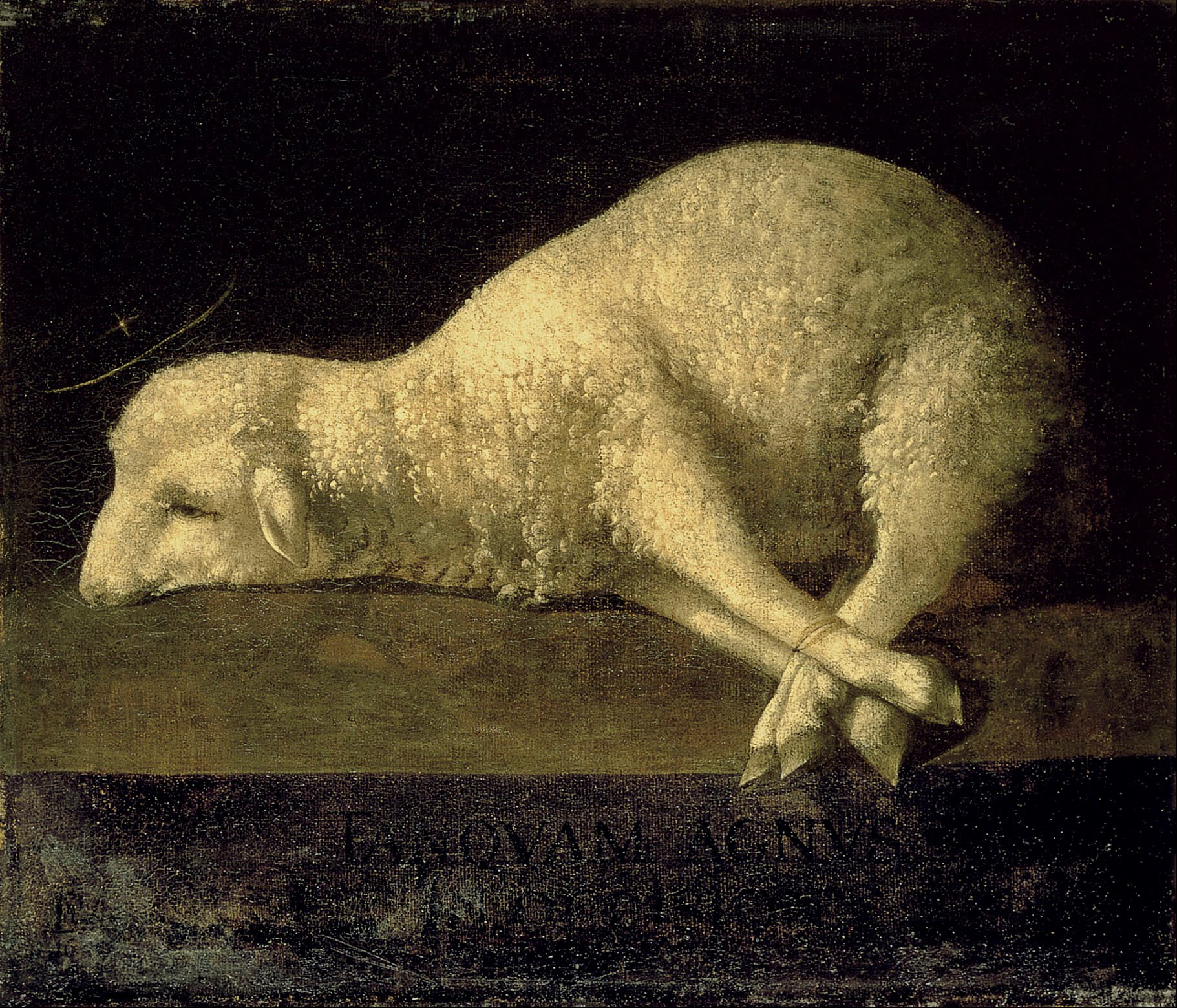
He was oppressed, yet when he was afflicted he opened not his mouth; as a lamb that is led to the slaughter, and as a sheep that before its shearers is dumb, so he opened not his mouth.
the place of the scripture which he read
◈Witness row — LXX & Dead Sea Scroll
LXX: Luke quotes the LXX verbatim, including v.8 “in his humiliation his judgment was taken away” (en te tapeinosei he krisis autou erthe) — a distinctly LXX rendering.
DSS: 1QIsaᵃ is the ~125 BC witness to this column.
By oppression and judgment he was taken away; and as for his generation, who among them considered that he was cut off out of the land of the living for the transgression of my people to whom the stroke was due?
same passage read aloud
◈Witness row — LXX & Dead Sea Scroll
LXX: Acts 8:33 = LXX Isaiah 53:8.
And they made his grave with the wicked, and with a rich man in his death; although he had done no violence, neither was any deceit in his mouth.
quotation/allusion: “neither was guile found in his mouth”
Vindication & intercessionIsaiah 53:10–12
Yet it pleased Jehovah to bruise him; he hath put him to grief: when thou shalt make his soul an offering for sin, he shall see his seed, he shall prolong his days, and the pleasure of Jehovah shall prosper in his hand.
Scripture only — no direct NT citation of this line.
◈Witness row — LXX & Dead Sea Scroll
DSS: Typology: Lev 5:15 guilt-offering (asham); the seed-thread (zera) to Gal 3:16.
He shall see of the travail of his soul, and shall be satisfied: by the knowledge of himself shall my righteous servant justify many; and he shall bear their iniquities.
Scripture only — no direct NT citation of this line.
Manuscript marquee · presented as data, not adjudicated
1QIsaᵃ / 1QIsab / 4QIsad + LXX read “he shall see LIGHT” (yir’eh ’or); the Masoretic Text lacks “light.” ESV/NIV/NRSV adopt or footnote it.
Critique: the fuller DSS/LXX reading may be a facilitating expansion; the shorter MT may be prior on lectio brevior. Do not adjudicate. — Hengel & Bailey; The Dead Sea Scrolls Bible(Abegg/Flint/Ulrich), both cite-only.
Therefore will I divide him a portion with the great, and he shall divide the spoil with the strong; because he poured out his soul unto death, and was numbered with the transgressors: yet he bare the sin of many, and made intercession for the transgressors.
this that is written must be accomplished in me
◈Witness row — LXX & Dead Sea Scroll
LXX: Luke follows the LXX “en tois anomois elogisthe.”
DSS: Secondary anchors Mark 15:28 / Heb 9:28 exist but Mark 15:28 is textually doubtful (absent from the best witnesses) — omitted here rather than shown without caveat.
Song text: American Standard Version (1901), Public Domain. NT quotation index: Westcott-Hort (1881, PD) & Swete (1900, PD), cross-checked against the UBS Parallel Passages DB (quarantined). Quoting-speaker frames from the atlas (lens 02/53).
The gallery · four masters
How the masters saw the Servant
Four masters, beside the lines they render
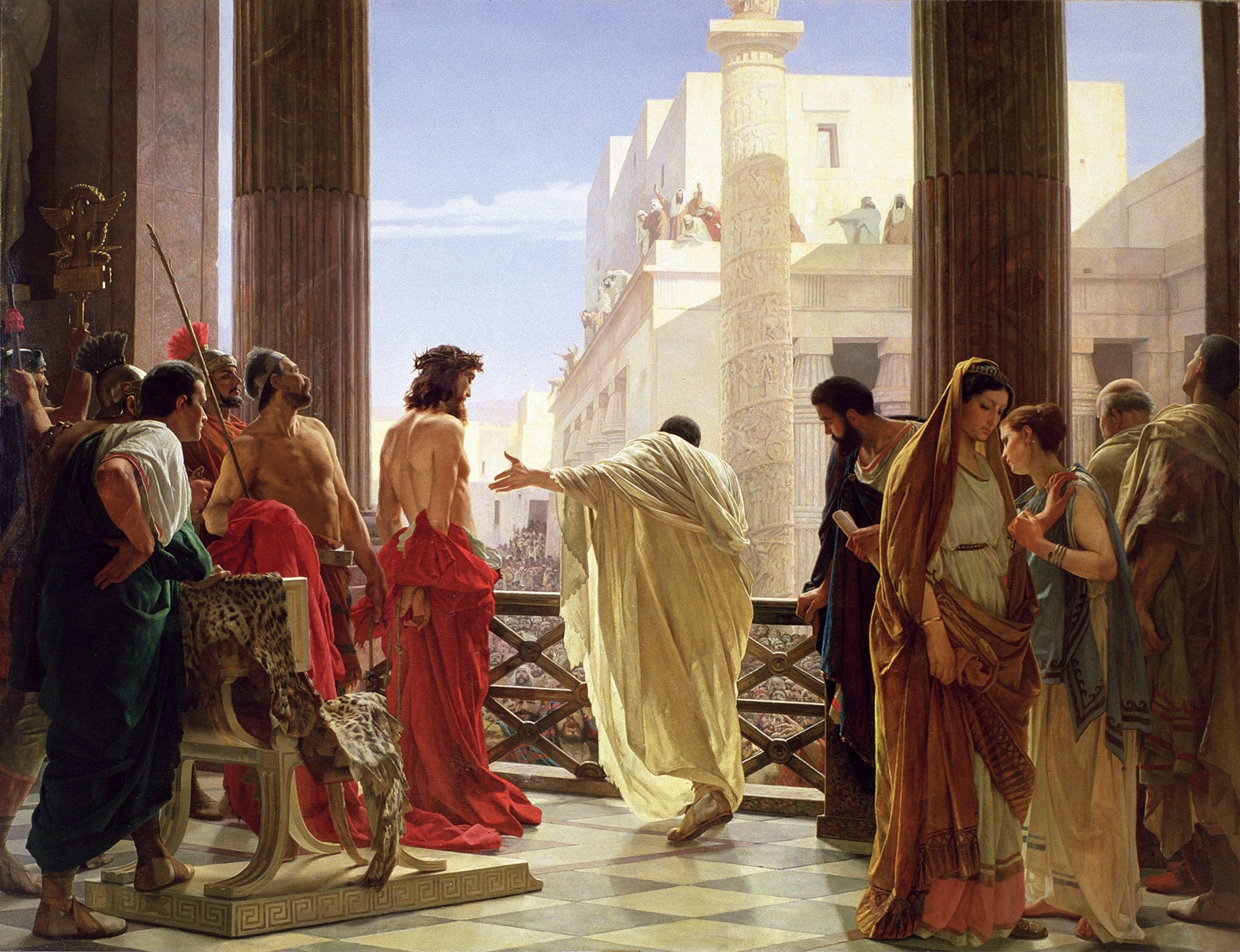
Four centuries of painters read this Song the way the apostles did. Each canvas below sits beside the line it renders. All images are Public Domain, served from Wikimedia Commons with attribution.


The Hebrew · live from the floor
The sin-bearing vocabulary — six doors to the workbench
Six doors to the workbench
The Song’s theology is carried by a handful of words. Each opens onto its full workbench page — every tagged occurrence in the corpus so far. Occurrence counts are read live from the tagged floor and grow as books are ingested.
sickness, disease, grief
53:3 “acquainted with grief”; 53:4 “borne our griefs”; 53:10 “put him to grief.” The door reveals that KJV “griefs” is literally sicknesses — which is why Matthew 8:17 applies it to Jesus’ healings.
24 tagged occurrences in the corpus so far →
pain, sorrow
53:3 “a man of sorrows”; 53:4 “carried our sorrows.” Paired with choli in classic synonymous parallelism.
16 tagged occurrences in the corpus so far →
to lift, bear, carry, take away, forgive
53:4 “he hath borne our griefs”; 53:12 “he bare the sin of many.” The sin-BEARING thread: Cain’s guilt “too great to bear” (Gen 4:13), the scapegoat “bearing all iniquities” (Lev 16:22), priestly forgiveness — the door that ties the Servant to the whole atonement vocabulary.
656 tagged occurrences in the corpus so far →
to bear a load, carry as a burden
53:4 “carried our sorrows”; 53:11 “he shall bear their iniquities.” The parallel bearing-verb beside nasa.
9 tagged occurrences in the corpus so far →
guilt-offering, trespass-offering, reparation
53:10 “make his soul an offering for guilt” — the technical Levitical cultic term (Lev 5:15), making the Servant the reparation sacrifice.
46 tagged occurrences in the corpus so far →
seed, offspring
53:10 “he shall see his seed” — the messianic seed-lemma from Gen 3:15 to Gal 3:16 (collective-singular).
229 tagged occurrences in the corpus so far →
Lexical data: Strong’s (PD) & BDB (PD); tagged occurrences from STEPBible TAHOT (CC BY 4.0), the live verse_words floor.
The honesty · both columns, at full strength
Whose servant? The reading has never been settled — and that is the point
Both readings, in their own words, uncut
The Song does not name its servant. The New Testament reads him as Jesus; the classical Jewish tradition reads him as Israel. Both readings are here, in their own words, uncut. The page does not adjudicate — it lets you hold the tension.
The ancient Jewish messianic reading
“Behold, my servant the Messiah shall prosper, he shall be exalted and extolled, and he shall be very strong.”
— Targum Jonathan on Isaiah 52:13. The earliest Jewish paraphrase read the servant messianically. It then famously redirects the suffering of 53:3–10 onto the nations / Israel rather than the Messiah — surface both halves of that reading honestly.
Targum Jonathan on Isaiah 52:13· Pauli, The Chaldee Paraphrase on the Prophet Isaiah (1871), Public Domain (via Sefaria)Jewish — Targum
The corporate-Israel steelman
“So is the custom of this prophet: he mentions all Israel as one man… Here too, ‘Behold My servant shall prosper,’ he said concerning the house of Jacob.”
— Rashi reads Isaiah 53 as the prophet’s custom of speaking of all Israel as one man: the nations’ astonished confession over a suffering, then vindicated, Israel.
Rashi (Shlomo Yitzchaki, 11th c.) on Isaiah 53:3· Judaica Press Complete Tanach, trans. A.J. Rosenberg (via Sefaria) — CC-BY, attribution requiredJewish — medieval peshat
The Song itself names its servant Israel just four chapters earlier — “Thou art my servant, O Israel, in whom I will be glorified” (49:3) — and its “my people” in 53:8 is distinguished from the servant: data the Christian column must weigh. Yet against a purely corporate reading, ancient Jewish reception was already messianic — the Talmud (Sanhedrin 98b) drew the Messiah’s name from 53:4 (Edersheim records the tradition of “the Leprous One”). Present neither as settled.
Isaiah 49:3· ASV (1901), Public DomainScripture floor
Alfred Edersheim, The Life and Times of Jesus the Messiah, Appendix IX (1883)· Public Domain (CCEL); recording Sanhedrin 98b / Midrash on Samuel — shown as reception, not proofJewish reception
◈Is Isaiah 52:13–53:12 fulfilled in Jesus? — the claim and its counter-readingcontested · tier 3 · typological / direct-disputed
The claim (Christian / NT reading)
Isaiah 52:13–53:12 is fulfilled in Jesus. The warrant is not inference but explicit apostolic citation: Jesus applies 53:12 to himself at the Last Supper (Luke 22:37, “this that is written must be accomplished in me”), and Matthew, John, Paul, Peter, and Philip each quote a line of the Song (see the facing-page exhibit above). The New Testament itself does the identifying.
Source: NT-explicit (PD-convergent quotation index). Class typological / direct-disputed; claim tier 3.
The critique (Jewish corporate-Israel reading)
The “servant” of Isaiah is repeatedly and explicitly named Israel / Jacob — Isaiah 41:8; 44:1–2; 49:3 (“Thou art my servant, O Israel”). Rashi reads chapter 53 as the prophet’s custom of speaking of “all Israel as one man” — the nations’ confession over a suffering, then vindicated, Israel.
Source: Rashi on Isaiah 53:3 (Judaica Press / Rosenberg, CC-BY); Isaiah 41:8; 44:1–2; 49:3 (ASV, PD).
The honest complication — both directions
Against a purely corporate reading: the earliest Jewish witness, Targum Jonathan (52:13), reads “my servant the Messiah,” and the Talmud (Sanh. 98b) gives the Messiah a name drawn from 53:4 — ancient Jewish reception was messianic before it was corporate (Edersheim App. IX, PD). Against Christian overreach: 49:3 explicitly names Israel, and the Song’s “my people” (53:8) is distinguished from the servant. Present neither as settled; let the reader hold the tension.
Follow the threads
Where the Song leads
Threads out from the Song
Sources
Every witness on this page
The full source list
- Isaiah 52:13–53:12 (ASV, 1901) — Public Domain (MannaFest floor text).
- NT-quotation index — Westcott-Hort, The New Testament in the Original Greek (1881, PD); H.B. Swete, Introduction to the OT in Greek (1900, PD); cross-checked against the UBS Parallel Passages DB (CC BY-SA 4.0, quarantined).
- Septuagint (LXX) — H.B. Swete, The Old Testament in Greek According to the Septuagint (1900), Public Domain.
- 1QIsaᵃ / DSS variants— Hengel & Bailey (2004, cite-only); Abegg, Flint & Ulrich, The Dead Sea Scrolls Bible(1999, cite-only); Peterson in Hixson & Gurry, Myths and Mistakes (2019, cite-only). Images: Leon Levy DSS Digital Library (link-only) + Commons File:Great_Isaiah_Scroll.jpg (PD-Art).
- Rashi on Isaiah 53:3 / 52:13 — The Judaica Press Complete Tanach with Rashi, trans. A.J. Rosenberg; via Sefaria, CC-BY (attribution).
- Targum Jonathan on Isaiah 52:13 — C.W.H. Pauli, The Chaldee Paraphrase on the Prophet Isaiah (1871), Public Domain; via Sefaria.
- Ancient Jewish reception — Alfred Edersheim, The Life and Times of Jesus the Messiah, Appendix IX (1883), Public Domain (CCEL).
- Reformation — John Calvin, Commentary on Isaiah (Pringle / Calvin Translation Society), Public Domain.
- Patristic — Epistle of Barnabas 7 (PD), the Day-of-Atonement two-goats typology behind the Leviticus 16 → Isaiah 53:6 scapegoat link.
- Hebrew lexical data— Strong’s (PD) & BDB (PD); STEPBible TAHOT tagged words (CC BY 4.0, the live verse_words floor).
- Curation rubric (cite-only) — R.B. Hays, Echoes of Scripture(1989); G.K. Beale & D.A. Carson, Commentary on the NT Use of the OT (2007).
Everything on this page is a proposal for Pastor Marc’s approval; nothing here is AI-authored theology. Full quotations are Public Domain or CC-BY (attributed); modern authors are cited only.