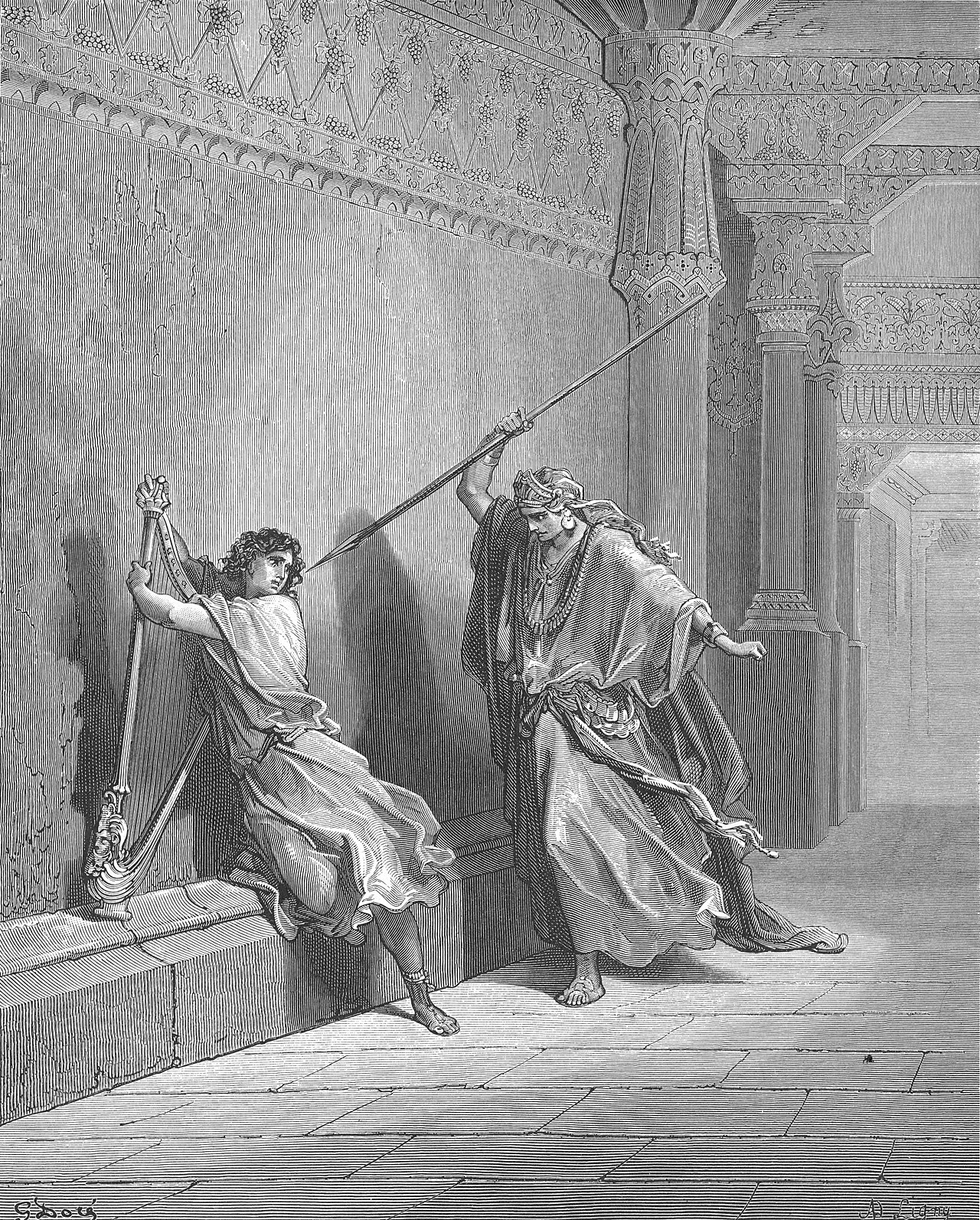
The Psalms were not written to be read silently. They were sheet music. David set aside whole families of Levites to lead the singing, and 1 Chronicles 23:5 counts four thousand of them praising the LORD with instruments David had made. Three great guilds carried the work — the sons of Asaph, of Heman, and of Jeduthun — and their names still sit at the top of psalms we sing today.
The little lines above many psalms are performance directions left in the text. "To the chief Musician" points to the worship leader. "Neginoth" means stringed instruments. "Selah," scattered seventy-one times, is most likely a musical pause or a swell. The temple had trumpets, harps, lyres, and cymbals, and the sound of them carried across the city.
Three times a year every Israelite family that could travel went up to Jerusalem for a feast. Psalms 120 through 134 are labeled Songs of Ascents — short, portable songs sung on the climb up to the city, which sits high in the hill country. Other groups had fixed places too: Psalms 113–118, the Egyptian Hallel, were sung at Passover, which is almost certainly the hymn Jesus and the disciples sang at the Last Supper.
Because the book grew over centuries, it carries the whole history of the nation inside it. Psalm 90 comes from the wilderness. Many psalms come from David's years running from Saul and reigning in Jerusalem. Psalm 137 was written by people sitting beside the canals of Babylon with their harps hung up in the trees. The hymnbook outlived the temple that first sang it.