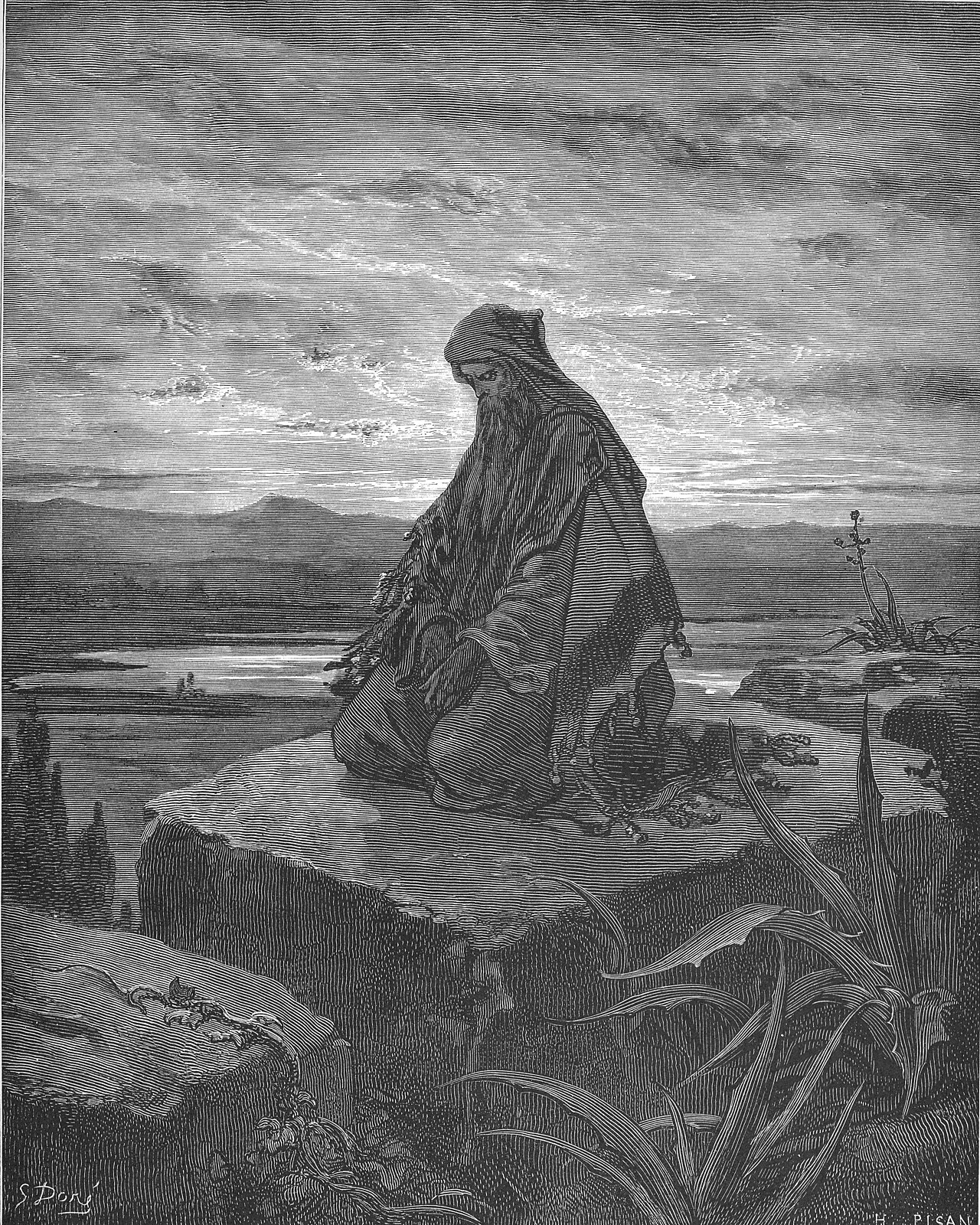
The Prophet Isaiah — Gustave Doré, Doré's English Bible (1866), public domain
Isaiah — The gospel prophet — a Judean court-prophet across Uzziah, Jotham, Ahaz, and Hezekiah (c. 740–700 BC) who sees past Assyria to Babylon and past Babylon to the Messiah. Sixty-six chapters divided into the Book of Judgment (1–39) and the Book of Comfort (40–66), climaxing in the Servant wounded for our transgressions.
Canon
Old Testament
Author
Isaiah ben Amoz — Heb. Yəša'yāhû, 'Yahweh saves' (1:1); Jewish tradition (b. Megillah 10b; b. Yevamot 49b) holds he was of royal blood and was martyred 'sawn asunder' under Manasseh — a tradition, not Scripture
Date
Ministry c. 740–700 BC — call 'in the year that king Uzziah died' (6:1) through Sennacherib's 701 BC siege of Jerusalem (36–37); spanning the reigns of Uzziah, Jotham, Ahaz, and Hezekiah (1:1)
Follow this verse’s cross-references two steps out. Each card is a verse this one points to, and beneath it the verses that one points to in turn. Where several different paths arrive at the same place, that place is listed first — the text keeps returning to it. Every stop shows its own words, and every stop is a page.
Then a mighty angel picked up a stone the size of a great millstone and cast it into the sea, saying: “With such violence the great city of Babylon will be cast down, never…
Then you are to say, ‘In the same way Babylon will sink and never rise again, because of the disaster I will bring upon her. And her people will grow weary.’” Here end the…
“And upon every high tower, and upon every fenced wall. Which may signify everything that serves to support and defend the antichristian hierarchy, particularly the secular powers. The Targum paraphrases it,
"and upon all that dwell in a high tower, and upon all that reside by a fortified wall.''
“Every high tower - Towers, or fortresses, were erected for defense and protection. They were made on the walls of cities, for places of observation (compare the note at Isa 21:5), or in places of strength, to be a refuge for an army, and to be a point from which they might sally out to attack their enemies.
“These vaunting men, who are as high towers in which the noisy bells are hung, on which the thundering murdering cannon are planted--these fenced walls, that fortify themselves with their native hardiness, and intrench themselves in their fastnesses--shall be brought down.
Matthew Henry· Commentary on the Whole Bible, 1710puritan
Your covenant with death will be dissolved, and your agreement with Sheol will not stand. When the overwhelming scourge passes through, you will be trampled by it.