The Gospels
Four inspired accounts of one life — three seen together, one seen on its own — and the honest question of how they relate.
Framework
Four Portraits, One Christ
The New Testament opens not with one life of Jesus but with four. That is deliberate, and the early church defended it: Irenaeus argued the Gospels could be "neither more nor fewer than they are" (Against Heresies 3.11.8), tying the four to the four living creatures of Ezekiel 1 and Revelation 4. Jerome fixed the pairing Christian art still uses — the man for Matthew, the lion for Mark, the ox for Luke, the eagle for John (prologue to his Commentary on Matthew).
Each face is a real difference in emphasis. Matthew traces a genealogy from Abraham, repeats "kingdom of heaven," and returns roughly a dozen times to a fulfillment formula — "that it might be fulfilled" — presenting Jesus as the promised King of Israel. Mark, the shortest, skips the birth entirely and races forward; his signature word euthys ("immediately") appears over forty times, framing Jesus the servant on the move. Luke writes a physician's ordered account for Theophilus (Luke 1:1-4), with the widest reach — women, the poor, prayer, the Spirit — and continues into Acts as one two-volume work. John stands apart, opening before Genesis ("In the beginning was the Word") with seven signs and seven "I am" sayings.
Four portraits, one subject. The differences are not contradictions to be smoothed away but angles to be received.
The Synoptic Eye and John's
The first structural fact of Gospel study is that Matthew, Mark, and Luke can be laid side by side. The Greek called them synoptic, "seen together" (from syn, together, and opsis, seeing) — a term made concrete when J.J. Griesbach printed the first parallel-column synopsis in 1776. The overlap is close: roughly ninety percent of Mark's content reappears in Matthew, and Luke carries much of it as well. The same events, often the same wording, run in the same order — Galilee to Jerusalem, converging on one climactic week.
John reads its own way. Over ninety percent of its material is unique. There are no parables and no exorcisms; instead there are extended discourses, seven carefully numbered signs, and the seven "I am" sayings. Where the Synoptics narrate, John interprets, and he says why: "these are written, that ye might believe that Jesus is the Christ" (John 20:31).
This is not a flaw in the record. The three-and-one shape gives a reader both a comparable, cross-checkable core and a distinct theological witness. Early testimony fits the pattern: Papias, preserved in Eusebius (Ecclesiastical History 3.39.15), remembered Mark as Peter's interpreter, writing accurately "but not in order," and Matthew arranging the sayings. Different hands, different aims, one Lord.
The Synoptic Problem
If three Gospels share so much wording, who wrote first, and who read whom? This is the Synoptic Problem, and it is a literary question rather than a doctrinal one. Several answers are seriously held, and each deserves a fair statement.
The Two-Source theory — Markan priority plus a lost sayings source called "Q" — dominates academic study: Mark came first, and Matthew and Luke independently drew on Mark plus Q. It best explains the shared order; its weakness is that Q has never been found. The Farrer hypothesis keeps Markan priority but drops Q, having Luke use both Mark and Matthew — simpler on sources, harder on why Luke would rearrange Matthew's sermons. The Two-Gospel (Griesbach) view reverses the order: Matthew first, Luke using Matthew, Mark abridging both — which fits some patristic testimony but strains on why Mark would shorten his predecessors. The Augustinian view follows the traditional sequence, Matthew then Mark then Luke, each building on the last.
The site does not bind a reader to any of these. Whichever hand moved first, the four Gospels are independently inspired, historical, and complementary. The literary question is genuinely open; trusting the text does not wait on its answer. Naming the debate plainly is more honest — and more useful — than pretending it away.
Reading the Four Together
Luke states the reason four accounts exist. "Forasmuch as many have taken in hand to draw up a narrative concerning those matters which have been fulfilled among us... it seemed good to me also... to write unto thee in order, most excellent Theophilus; that thou mightest know the certainty" (Luke 1:1-4). He knows of the other accounts. He writes not to replace them but to add certainty — the plainest window in the New Testament onto how a Gospel was composed: from eyewitness testimony, carefully traced, set in order for a reader who needs solid ground.
That is how the four are best read together. Matthew shows the King fulfilling the promises to Israel; Mark presses the cost of following a servant who suffers; Luke widens the door to every nation; John lifts the eyes to the Word made flesh. The same paralytic is lowered through the same roof in Matthew 9, Mark 2, and Luke 5 — and the small differences in each telling are the fingerprints of real witnesses, not the seams of a fabrication.
From here the natural next steps are the design of the fourfold Gospel itself, the fulfillment quotations woven through them, and each book on its own terms. The four voices do not compete. They surround one life, and the reader who listens to all four hears it whole.
Four accounts, one Christ
The Synoptic eye and John’s
Three of the four Gospels can be laid side by side in parallel columns — the same events, often the same words. The Greek called them synoptic, “seen together.” The fourth reads its own way. This is the first fact of Gospel study, and the honest place to begin.
The Synoptics
Matthew · Mark · Luke
A shared narrative frame — Galilee to Jerusalem, one climactic week. Roughly ninety percent of Mark reappears in Matthew; Luke carries much of it too. Set in columns since Griesbach’s synopsis of 1776, their overlap is close enough to compare line by line.
John
The fourth voice
Over ninety percent unique. No parables, no exorcisms; instead seven signs, long discourses, and the seven “I am” sayings. It opens before creation and states its purpose plainly: “that ye might believe” (John 20:31).
The four at a glance4
One life, four framings
It is not possible that the Gospels can be either more or fewer in number than they are. For, since there are four zones of the world … it is fitting that the church should have four pillars.
Irenaeus of Lyons· Against Heresies 3.11.8, c. 180
Irenaeus tied the four to the four living creatures of Ezekiel 1 and Revelation 4. Jerome fixed the pairing that Christian art still uses: the man for Matthew, the lion for Mark, the ox for Luke, the eagle for John.
Jerome· prologue to the Commentary on Matthew
The four faces
Each Gospel’s distinct portrait
A genealogy from Abraham; “kingdom of heaven” throughout; roughly a dozen fulfillment formulas (“that it might be fulfilled”). Jesus the Son of David — the promised King.
No genealogy, no birth — straight to action. The signature word euthys (“immediately”) drives the pace over forty times. Jesus the suffering Servant on the move.
A physician’s careful narrative for Theophilus (Luke 1:1-4). The widest reach — women, the poor, prayer, the Spirit. Jesus the Son of Man, Savior of every nation. Volume one of Luke–Acts.
Begins before Genesis: “In the beginning was the Word.” Seven signs, seven “I am” sayings, and over ninety percent unique material — written “that ye might believe” (John 20:31).
Why more than one
Luke names the reason
Forasmuch as many have taken in hand to draw up a narrative concerning those matters which have been fulfilled among us, even as they delivered them unto us, who from the beginning were eyewitnesses and ministers of the word, it seemed good to me also … to write unto thee in order, most excellent Theophilus; that thou mightest know the certainty concerning the things wherein thou wast instructed.Luke knows of the other accounts and writes to add certainty, not to compete.
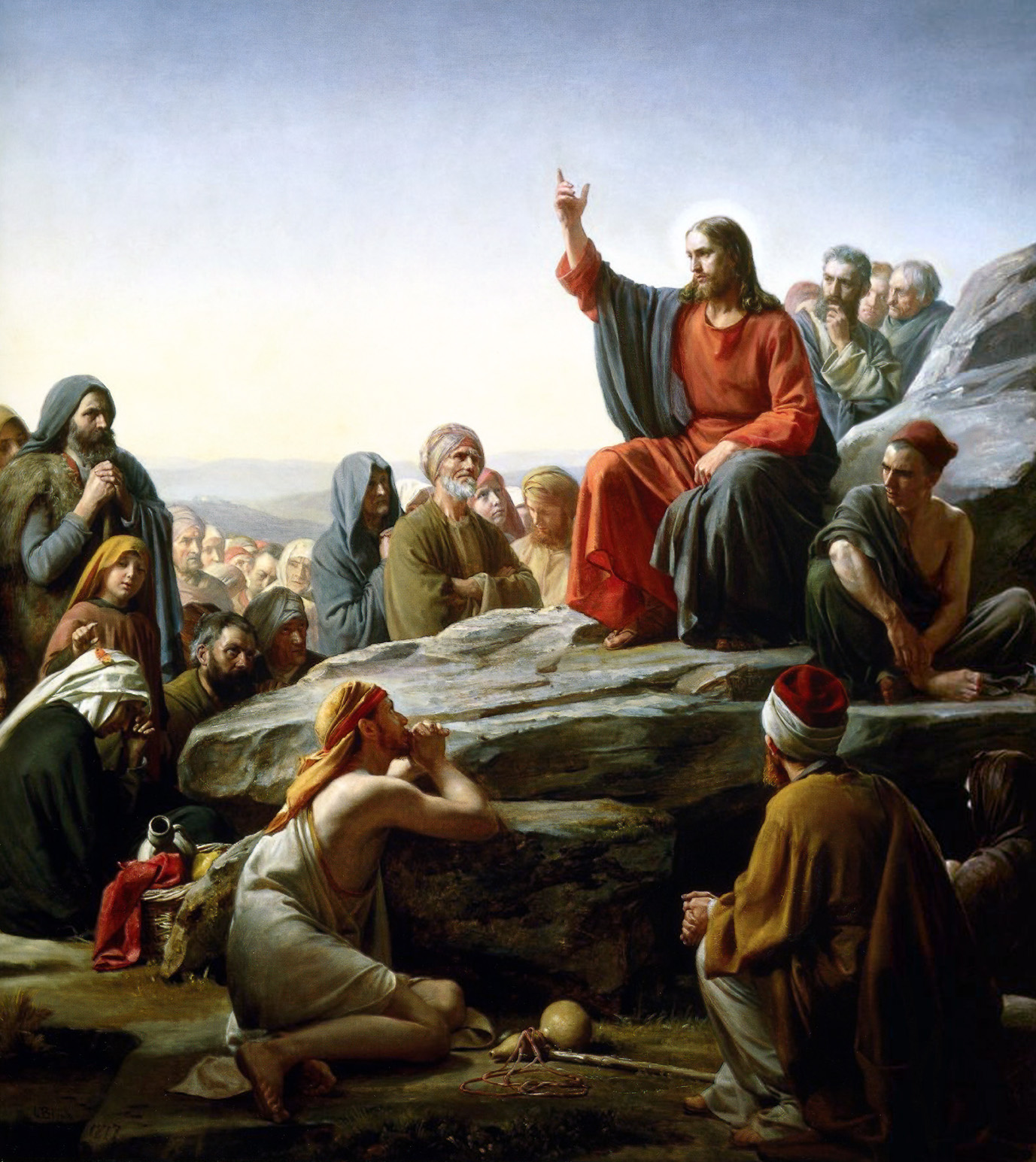
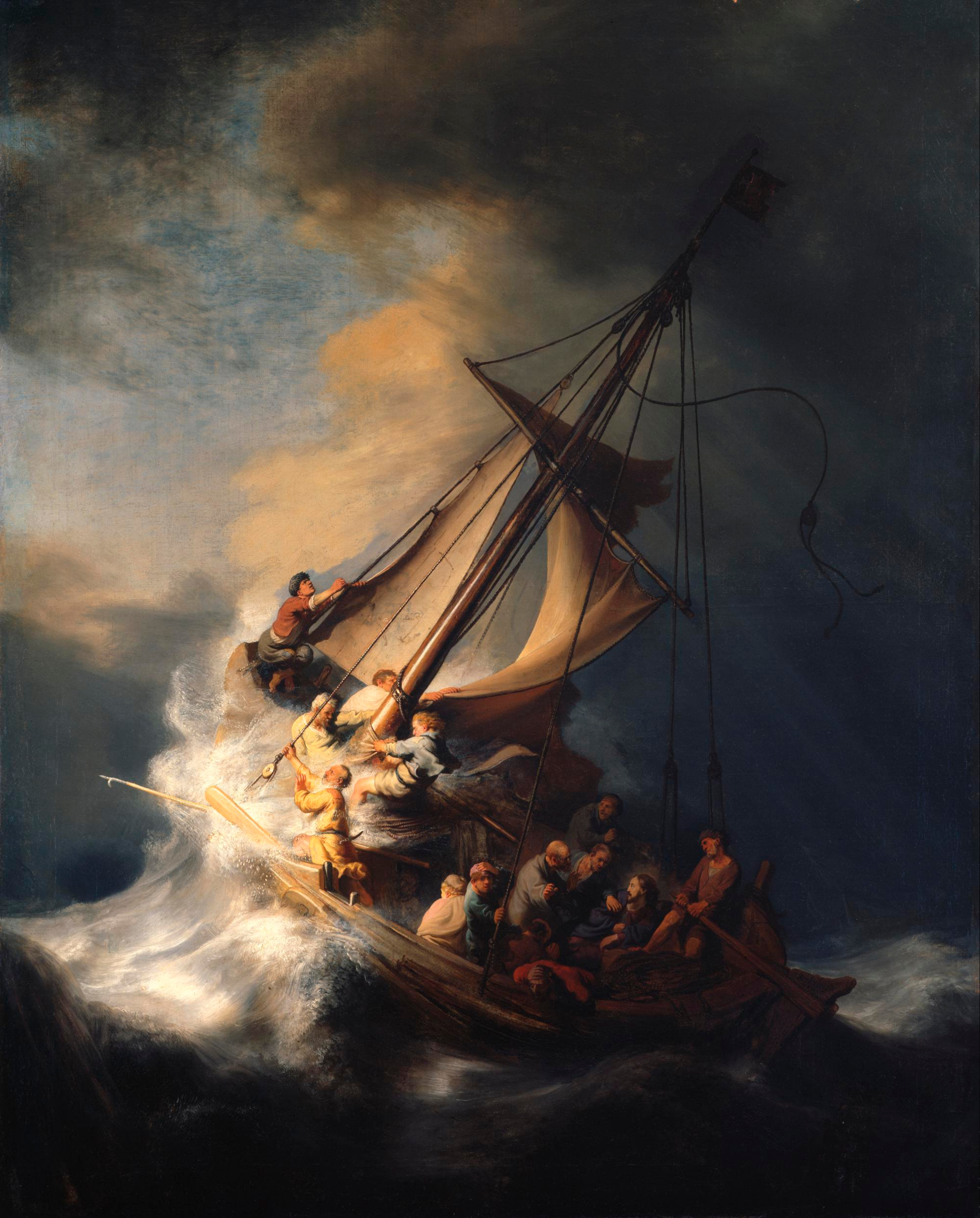
Seen by the painters
Three voices, three scenes

The honest question
The Synoptic Problem
If three Gospels share so much wording, who wrote first and who read whom? This is a literary question, not a doctrinal one — and it is genuinely open. The major answers, each steelmanned:
◈Four accounts of the accountscontested · Open literary question
Two-Source (Markan priority + Q). Mark first; Matthew and Luke independently used Mark plus a lost sayings source, “Q.” The dominant academic view; it best explains the shared order. Its weakness: Q is hypothetical, never found.
Farrer.Mark first, Matthew used Mark, Luke used both — no Q needed. Simpler on sources; strained on why Luke would rearrange Matthew’s sermons.
Two-Gospel (Griesbach). Matthew first, Luke used Matthew, Mark abridged both. Fits some early testimony; strains on why Mark would shorten.
Augustinian.The traditional order — Matthew, then Mark, then Luke, each using predecessors. Matches the earliest church voices; less favored on purely literary grounds.
The site’s posture: the four Gospels are independently inspired, historical, and complementary. Whichever hand moved first, no reader is bound to a hypothesis to trust the text.
Keep reading