Miracles of Jesus
Thirty-five recorded works of power across the four Gospels — healings, nature, raisings from the dead, and deliverance — every one anchored to its passage, walked as a ledger.
No man can do these miracles that thou doest, except God be with him.
Framework
What the Gospels record
The four Gospels record a set of specific, witnessed acts: lepers cleansed, a storm silenced with a word, thousands fed from a boy's lunch, the dead raised, demoniacs restored to their right mind. Counted as distinct events (harmonizing the parallel accounts), the recorded works number about thirty-five — the count is a scholarly count, not a stated number; no Gospel numbers them, and the summary statements make plain the records are selective: "and he healed them all" (Matt 12:15), "many other signs truly did Jesus… which are not written in this book" (John 20:30).
Each miracle on this page is one ledger row: the event, its kind, its primary passage, and its parallels — and each row opens the miracle's own study page, where the account is walked in full. The reaction the works produced is its own study: Nicodemus's inference — "no man can do these miracles that thou doest, except God be with him" (John 3:2) — and the crowd's question, "When Christ cometh, will he do more miracles than these?" (John 7:31), lead to the sibling page on the messianic miracles.
Framework summary from the research brief (2026-07-22-miracles-brief.md); parallel arrangement per A. T. Robertson's Harmony of the Gospels (1922, PD); scripture KJV (PD).
Power, sign, wonder — the vocabulary
Peter's Pentecost sermon uses all three New Testament words in one breath: "Jesus of Nazareth, a man approved of God among you by miracles and wonders and signs" (Acts 2:22). The synoptics' usual word is dynamis (δύναμις, G1411) — a work of power. John's controlling word is sēmeion (σημεῖον, G4592) — a sign, a work that points beyond itself; and Jesus' own preferred word in John is simply erga — works ("the works that I do in my Father's name, they bear witness of me," John 10:25). Teras, wonder (G5059), never stands alone in the New Testament — the amazement is never the point.
The vocabulary is the page's structure in miniature: the synoptic ledger records the works of power; John's seven signs — the classical count of the Book of Signs, John 1:19–12:50 — carry John's stated purpose: "these are written, that ye might believe that Jesus is the Christ, the Son of God" (John 20:31). The seven-count is itself a scholarly reconstruction (the identity of the seventh sign is genuinely contested), and the page says so where it lists them.
Lexical data: Strong's/Thayer's (PD). Signs framework: C. H. Dodd, The Interpretation of the Fourth Gospel (1953); Andreas Köstenberger, John (BECNT, 2004) — cite-only, per atlas lens 16.
Where the founder plants his flag
The site's posture is continuationist — the God who worked these works has not changed — and the founder's own commentary on the miracle ministry will be planted here. Until then the page speaks descriptively: what the Gospels record, where each account lives, and what Scripture itself says the works establish.
The ledger
Thirty-five rows, four kinds
What follows is a claim-and-receipt table: every recorded miracle, its primary passage, and its witnesses — the parallel accounts named, the singular accounts marked. The rows mirror the site’s live study cluster, where each miracle has its own page; nothing here is a summary of a summary. Where harmonies differ (Matthew counts two men at Gadara and Jericho where Mark and Luke follow one), the fuller narrative is the primary reference and the difference is stated in the row — noted, not adjudicated.
The works flagged messianic signfollow the pattern of Isaiah 35:5–6 — the blind seeing, the mute speaking — and that argument has its own page: The Messianic Miracles.
Kind I
Healings — 18 recorded
| Miracle | Passage | Parallels & witness |
|---|---|---|
| The leperMessianic sign | Matt 8:2–4 | ∥ Mark 1:40–45; Luke 5:12–16 — sent to the priest “for a testimony unto them.” |
| The centurion's servant | Matt 8:5–13 | ∥ Luke 7:1–10 — healed at a distance, by a word. |
| Peter's mother-in-law | Matt 8:14–17 | ∥ Mark 1:29–31; Luke 4:38–39 — the evening healings follow, quoting Isaiah 53:4. |
| The paralytic through the roof | Mark 2:1–12 | ∥ Matt 9:1–8; Luke 5:17–26 — “that ye may know that the Son of man hath power on earth to forgive sins.” |
| The man with the withered hand | Mark 3:1–6 | ∥ Matt 12:9–14; Luke 6:6–11 — the sabbath test; the counsel to destroy him begins here. |
| The woman with the issue of blood | Mark 5:25–34 | ∥ Matt 9:20–22; Luke 8:43–48 — healed inside the Jairus narrative. |
| Two blind men in GalileeMessianic sign | Matt 9:27–31 | They cry “Thou son of David” — the messianic address itself. |
| The Canaanite woman's daughter | Matt 15:21–28 | ∥ Mark 7:24–30 — a Gentile's faith answered at a distance. |
| The deaf and mute man | Mark 7:31–37 | Mark alone — “he maketh both the deaf to hear, and the dumb to speak” (the Isaiah 35 cadence). |
| The blind man at Bethsaida | Mark 8:22–26 | Mark alone — the one two-stage healing (“I see men as trees, walking”). |
| The epileptic boy | Mark 9:14–29 | ∥ Matt 17:14–21; Luke 9:37–43 — below the mount of transfiguration; cross-listed under deliverance. |
| The woman bent over | Luke 13:10–17 | Luke alone — “whom Satan hath bound, lo, these eighteen years,” on the sabbath. |
| The ten lepers | Luke 17:11–19 | Luke alone — ten cleansed; the one Samaritan returns. |
| Blind BartimaeusMessianic sign | Mark 10:46–52 | ∥ Matt 20:29–34 (two men); Luke 18:35–43 — “Jesus, thou son of David, have mercy on me.” |
| Malchus's ear | Luke 22:50–51 | Luke alone records the healing — the last miracle before the cross, for an enemy. |
| The official's son at Capernaum | John 4:46–54 | John alone — “the second miracle that Jesus did, when he was come out of Judaea.” |
| The invalid at Bethesda | John 5:1–15 | John alone — thirty-eight years; the sabbath controversy of John 5 follows from it. |
| The man born blindMessianic sign | John 9:1–41 | John alone — “since the world began was it not heard” (9:32); the formal inquest follows. |
The frame
What the text says the works establish
When the even was come… he cast out the spirits with his word, and healed all that were sick: that it might be fulfilled which was spoken by Esaias the prophet, saying, Himself took our infirmities, and bare our sicknesses.Matthew grounds the healing ministry in Isaiah 53:4 — Scripture's own citation, not an inference.
Rabbi, we know that thou art a teacher come from God: for no man can do these miracles that thou doest, except God be with him.Nicodemus's inference — a ruler of the Pharisees reasons from the works to the sender.
And many other signs truly did Jesus in the presence of his disciples, which are not written in this book: but these are written, that ye might believe that Jesus is the Christ, the Son of God.John's stated editorial purpose — the record is selective, and it says why.
Kind II
Nature — 9 recorded
| Miracle | Passage | Parallels & witness |
|---|---|---|
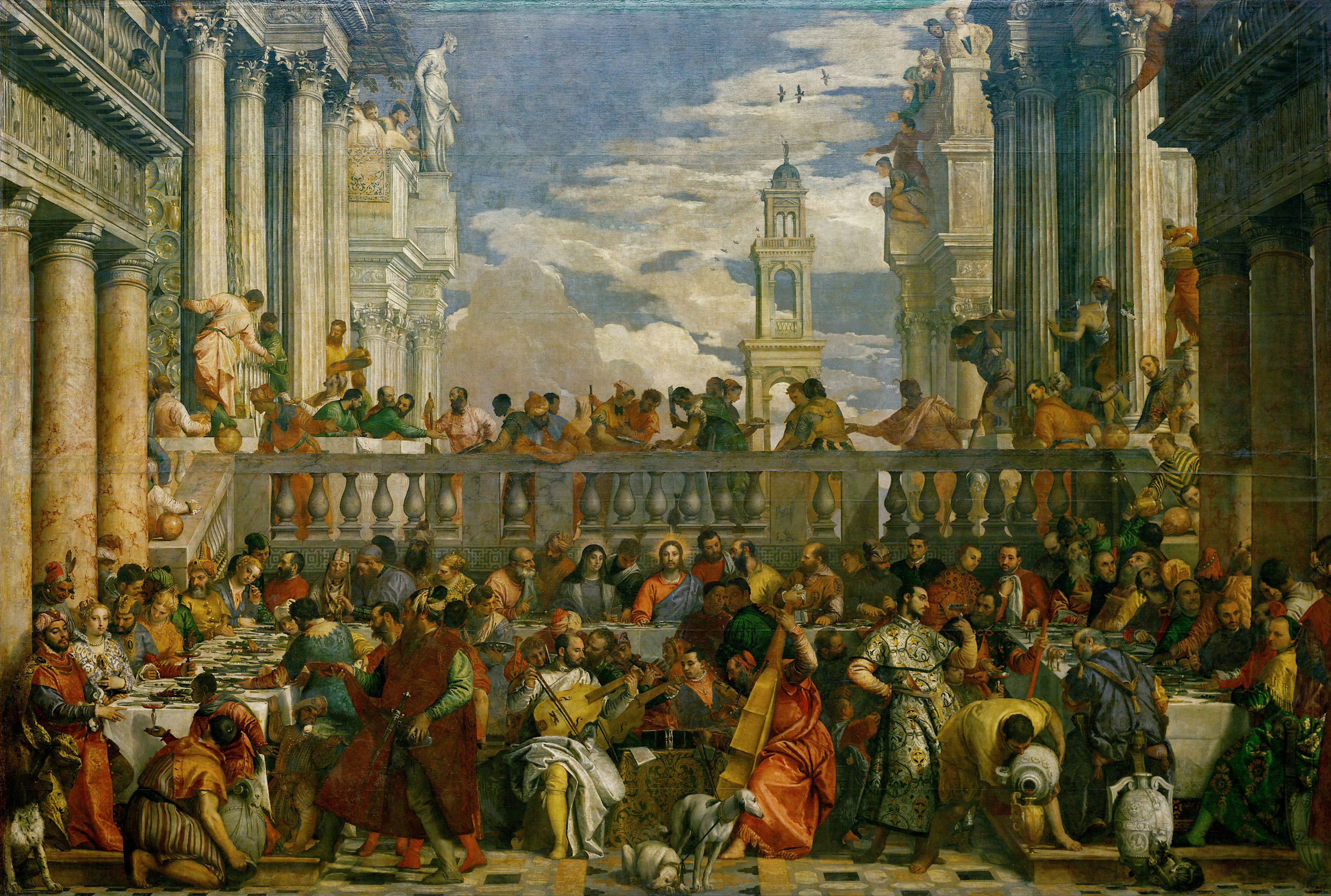
| Water into wine at Cana | John 2:1–11 | “This beginning of miracles did Jesus in Cana of Galilee, and manifested forth his glory.” |
| The first catch of fish | Luke 5:1–11 | Luke alone — Peter's call: “Depart from me; for I am a sinful man, O Lord.” |
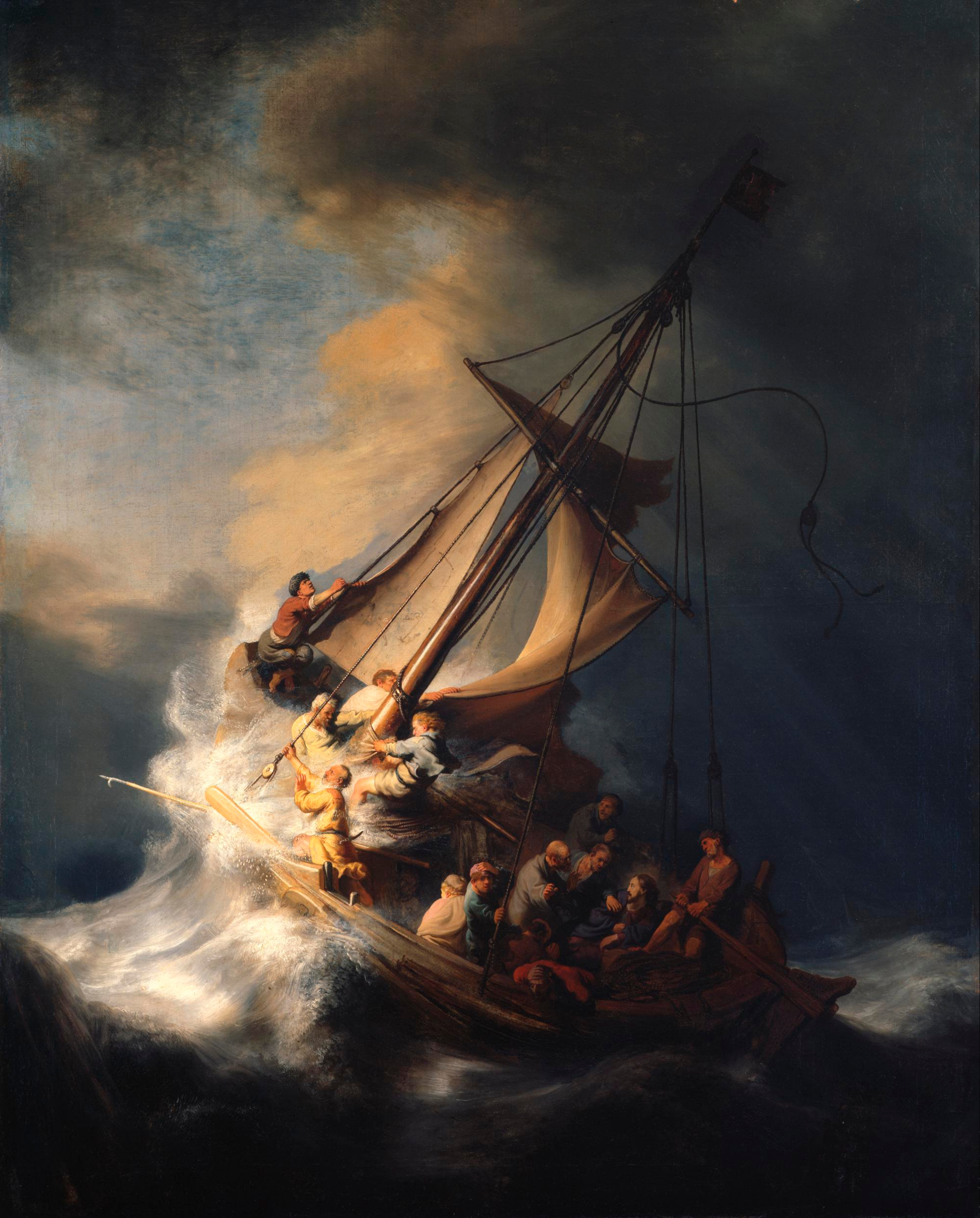
| Stilling the storm | Mark 4:35–41 | ∥ Matt 8:23–27; Luke 8:22–25 — “What manner of man is this, that even the wind and the sea obey him?” |
| Feeding the five thousand | Mark 6:30–44 | ∥ Matt 14; Luke 9; John 6 — the only miracle recorded in all four Gospels. |
| Walking on the water | Matt 14:22–33 | ∥ Mark 6:45–52; John 6:16–21 — “Of a truth thou art the Son of God.” |
| Feeding the four thousand | Mark 8:1–10 | ∥ Matt 15:32–39 — a distinct event; Jesus distinguishes the two feedings himself (Mark 8:19–20). |
| The coin in the fish's mouth | Matt 17:24–27 | Matthew alone — the temple tax paid “for me and thee.” |
| Cursing the fig tree | Matt 21:18–22 | ∥ Mark 11:12–14, 20–24 — the one destructive sign, an acted parable in the passion week. |
| The second catch of fish | John 21:1–14 | Post-resurrection — an hundred fifty and three fishes, “and for all there were so many, yet was not the net broken.” |
Kind III
Raisings from the dead — 3 recorded
| Miracle | Passage | Parallels & witness |
|---|---|---|
| Jairus's daughter | Mark 5:21–43 | ∥ Matt 9:18–26; Luke 8:40–56 — “Talitha cumi… Damsel, I say unto thee, arise.” |
| The widow of Nain's son | Luke 7:11–17 | Luke alone — stopped a funeral; “a great prophet is risen up among us.” |
| The raising of Lazarus | John 11:1–44 | John alone — four days dead; the sign that convenes the council of John 11:47–53. |
The storm
“What manner of man is this?”
Kind IV
Deliverance — 5 recorded
| Miracle | Passage | Parallels & witness |
|---|---|---|
| The demoniac in the synagogue | Mark 1:21–28 | ∥ Luke 4:31-37 — the first exorcism recorded; “he commandeth even the unclean spirits, and they do obey him.” |
| The Gadarene demoniac — Legion | Mark 5:1–20 | ∥ Matt 8:28–34 (two men); Luke 8:26–39 — sent home as the first witness to Decapolis. |
| The mute demoniacMessianic sign | Matt 9:32–34 | “It was never so seen in Israel” — and the first Beelzebub charge answers it. |
| The blind and mute demoniacMessianic sign | Matt 12:22–24 | ∥ Luke 11:14 — “Is not this the son of David?”; the Beelzebub verdict and the sign-demand follow. |
| The boy with demonic seizures | Matt 17:14–21 | Cross-listed with healings (the epileptic boy) — one event, per the parallel accounts. |
The fourth Gospel
John’s seven signs — the classical count
- 1Water to wine at Cana — “the first of his signs”John 2:1–11
- 2The official's son healed at a distanceJohn 4:46–54
- 3The invalid at BethesdaJohn 5:1–9
- 4Feeding the five thousandJohn 6:1–14
- 5Walking on the seaJohn 6:16–21
- 6The man born blindJohn 9:1–7
- 7The raising of LazarusJohn 11:1–44
The seven-count organizes the Book of Signs (John 1:19–12:50) but is a scholarly reconstruction, not a stated number — the identity of the seventh sign is genuinely contested (Lazarus, the sea-walking, or the resurrection itself). Framework per C. H. Dodd, The Interpretation of the Fourth Gospel(1953), and Andreas Köstenberger, John (BECNT, 2004) — cite-only.
The first sign
The glory manifested at Cana
Go deeper