Wisdom and the Poets
Five Hebrew voices in verse — Job, Psalms, Proverbs, Ecclesiastes, and the Song — and how their poetry, built on paired lines, meets every season of a life.
Framework
The Five Poets
After the Law and the histories, the Hebrew canon turns to verse. Five books hold Israel's poetry, and each speaks a distinct register of one faith.
Job (42 chapters) is the crucible: a righteous man stripped of everything, four rounds of debate with his friends, and God finally answering out of the whirlwind (Job 38–41). Its answer to suffering is not an explanation but an enlargement — the sufferer's frame widened until trust no longer needs the ledger balanced.
Psalms (150) is the songbook of Israel, titled in Hebrew Tehillim, "praises" — even though a third of its poems are laments. It falls into five internal books (1–41, 42–72, 73–89, 90–106, 107–150), each closing in doxology, a Psalter shaped to mirror the five books of Moses.
Proverbs (31) is street-level wisdom under Solomon's name, anchored by its thesis: "The fear of Jehovah is the beginning of knowledge" (Prov 1:7). The Hebrew hokmah (H2451) is not stored information but skilled living.
Ecclesiastes (12) is Qoheleth's reckoning — "Vanity of vanities… all is vanity" (Ecc 1:2) — where the key word hebel (H1892) means vapor or breath: fleeting, not worthless.
Song of Songs (8) is the garden: love poetry between bride and beloved, the canon's sanctification of covenant desire. Together the five cover the ground between the wedding and the grave. (Sources: Scripture, ASV; Delitzsch's 19th-c. commentaries.)
How Hebrew Poetry Works
Hebrew verse does not rhyme sound; it rhymes thought. A line lands, and a second line answers it. Robert Lowth named the pattern in his Lectures on the Sacred Poetry of the Hebrews (1753), and his three-part taxonomy still frames every psalm and proverb.
Synonymous parallelism has the second line echo the first: "The heavens declare the glory of God; / And the firmament showeth his handiwork" (Ps 19:1, ASV). The two halves say one thing twice, from two angles.
Antithetic parallelism has the second line reverse the first — the engine of Proverbs: "A wise son maketh a glad father; / But a foolish son is the heaviness of his mother" (Prov 10:1). Wisdom is taught by contrast, the fork in the road drawn as two lines.
Synthetic (or climactic) parallelism has the second line advance or complete the first rather than repeat it: "Trust in Jehovah with all thy heart, / And lean not upon thine own understanding" (Prov 3:5). The thought builds across the couplet.
Because the meaning rides on paired lines and not on rhyme or meter, Hebrew poetry survives translation almost intact — the structure is portable in a way sound never is. This is why the Psalms sing in English, Latin, or Swahili with their force undimmed. Read the two halves of every poetic verse as a single breath, and the mechanism does its work. (Source: Lowth, 1753, public domain; refined but retained by later scholars including Delitzsch.)
Where Each Book Belongs
The wisdom books are less read straight through than reached for. Each answers a different hour of a life, and knowing which to open is itself a kind of wisdom.
Job is for when you suffer without an answer. It refuses easy theodicy: the friends who explain the pain are the ones God rebukes (Job 42:7). Job is the book that lets grief argue and does not flinch.
Psalms is for every season. Athanasius observed that where most of Scripture speaks to the reader, the Psalms speak for the reader — they hand you the words for praise, terror, complaint, repentance, and trust when you have none of your own.
Proverbs is for the daily fork in the road — money, speech, work, friendship, appetite. It is wisdom for the ordinary Tuesday, not the crisis.
Ecclesiastes is for when the striving feels like vapor. Qoheleth walks through pleasure, labor, and achievement and finds each one hebel — a breath — then lands on the only ground that holds: "Fear God, and keep his commandments" (Ecc 12:13).
Song of Songs is for covenant love, the canon's refusal to treat marital desire as beneath the sacred.
The historic church read the Song allegorically (Christ and the church) and Ecclesiastes as Solomon's own late reckoning; the natural reading takes the Song as a plain love poem and leaves Ecclesiastes' authorship open. The site holds the plain sense first without erasing the typology, and keeps traditional authorship while noting the debate. (Source: Scripture, ASV; Delitzsch.)
The Poets
Five Voices in Verse
After the Law and the histories, the Hebrew canon turns to verse. Five books hold the poetry of Israel — the argument in the ashes, the songs of the sanctuary, the wisdom of the street, the reckoning at the end of striving, and the love song. Each speaks a different register of one faith. Their measure is not chapters but where each one meets you.
How it works
Poetry Built on Pairs
Hebrew verse does not rhyme sound; it rhymes thought. A line lands, and a second line answers it — echoing, reversing, or advancing the first. Robert Lowth named the pattern in 1753 (Lectures on the Sacred Poetry of the Hebrews); it is the engine under every psalm and proverb. Read the two halves as one breath.
First line
The heavens declare
The heavens declare the glory of God;
Second line
The firmament shows
And the firmament showeth his handiwork.
A wise son maketh a glad father; but a foolish son is the heaviness of his mother.Antithetic — the second line reverses the first: wise against foolish, glad against heavy.
Trust in Jehovah with all thy heart, and lean not upon thine own understanding.Synthetic — the second line does not repeat but completes the command of the first.
Robert Lowth· Lectures on the Sacred Poetry of the Hebrews (1753)
The Singer
The King with the Harp
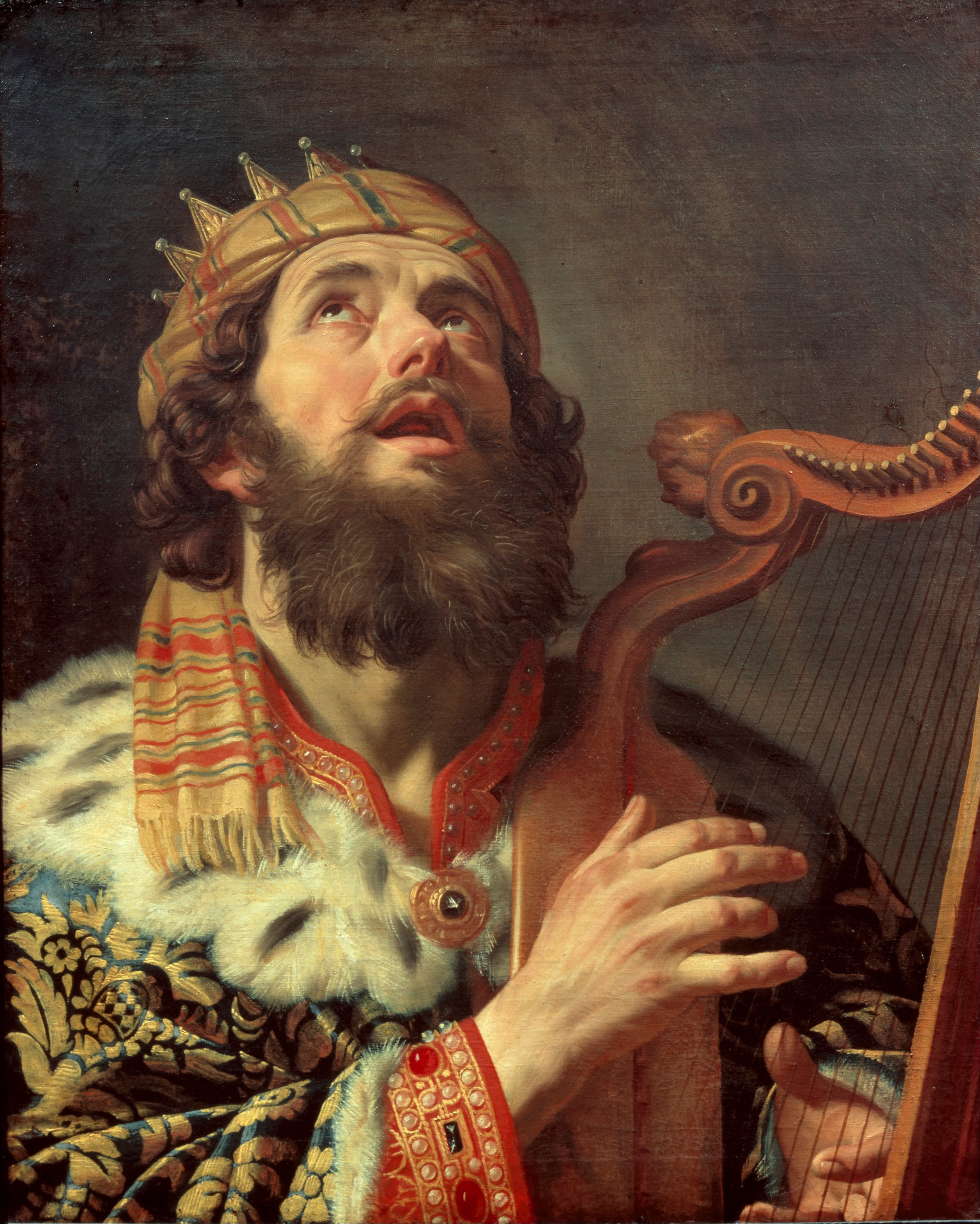
The Psalms carry the widest emotional range in Scripture — exultation, terror, complaint, repentance, and trust — and the tradition roots them in David, who "played with his hand" before Saul (1 Samuel 16:23). The Hebrew title of the book is Tehillim, "praises," even though a third of its songs are laments: the poets bring the whole self, not the composed self.
Where each belongs
A Book for Every Season
The wisdom books are not read straight through so much as reached for. Each answers a different hour of a life; together they cover the ground between the wedding and the grave.
Contested
Two Debated Readings
◈How to read the Song, and who wrote the Preachercontested · Steelmanned — the site's posture labeled
The Song of Songs — allegory or love poem?
The historic synagogue and church read the Song allegorically: the beloved is YHWH and Israel, or Christ and the church. The natural reading takes it as what it plainly is — a celebration of covenant marital love, set in the canon to sanctify desire. Site posture: the plain sense first — a poem of covenant love — with genuine typological resonance, neither reading erasing the other.
Ecclesiastes — Solomon, or a later voice?
The book names its author "Qoheleth… son of David, king in Jerusalem" (Ecc 1:1). Some read a later persona from its later Hebrew. Site posture: traditional Solomonic authorship; the debate noted, the wisdom undiminished either way. Hebel — "vanity" — is better heard as "vapor": fleeting, not worthless.
Go deeper
Follow the Poetry
Lens
The AcrosticsPsalm 119, Psalm 25, and Lamentations are built on the Hebrew alphabet — one stanza per letter, structure carrying meaning.Lens
ChiasmHebrew poets mirror ideas around a center; the shape of the poem is part of what it says.Book
Job, in fullThe oldest debate in Scripture — why the righteous suffer — answered not with reasons but from the whirlwind (Job 38–41).Word
hebel — vaporThe word behind Ecclesiastes' 'vanity': breath, mist, here and gone. Read the Preacher through it.